On This Page +
- What Does a Local Emergency Arborist Do?
- What Is a General Tree Crew Responsible For?
- Emergency Arborist Buffalo: When Should You Call One?
- Local Emergency Arborist vs. General Crew: Key Differences
- Does a 24/7 Arborist Make a Difference During a Storm?
- What to Look for in a Certified Emergency Tree Expert
- Emergency Tree Removal in Buffalo NY: What to Expect
- Preventing Tree Emergencies Before the Next Buffalo Storm
- Contact Nature Wise Tree Service for Tree Care in Buffalo
- Frequently Asked Questions
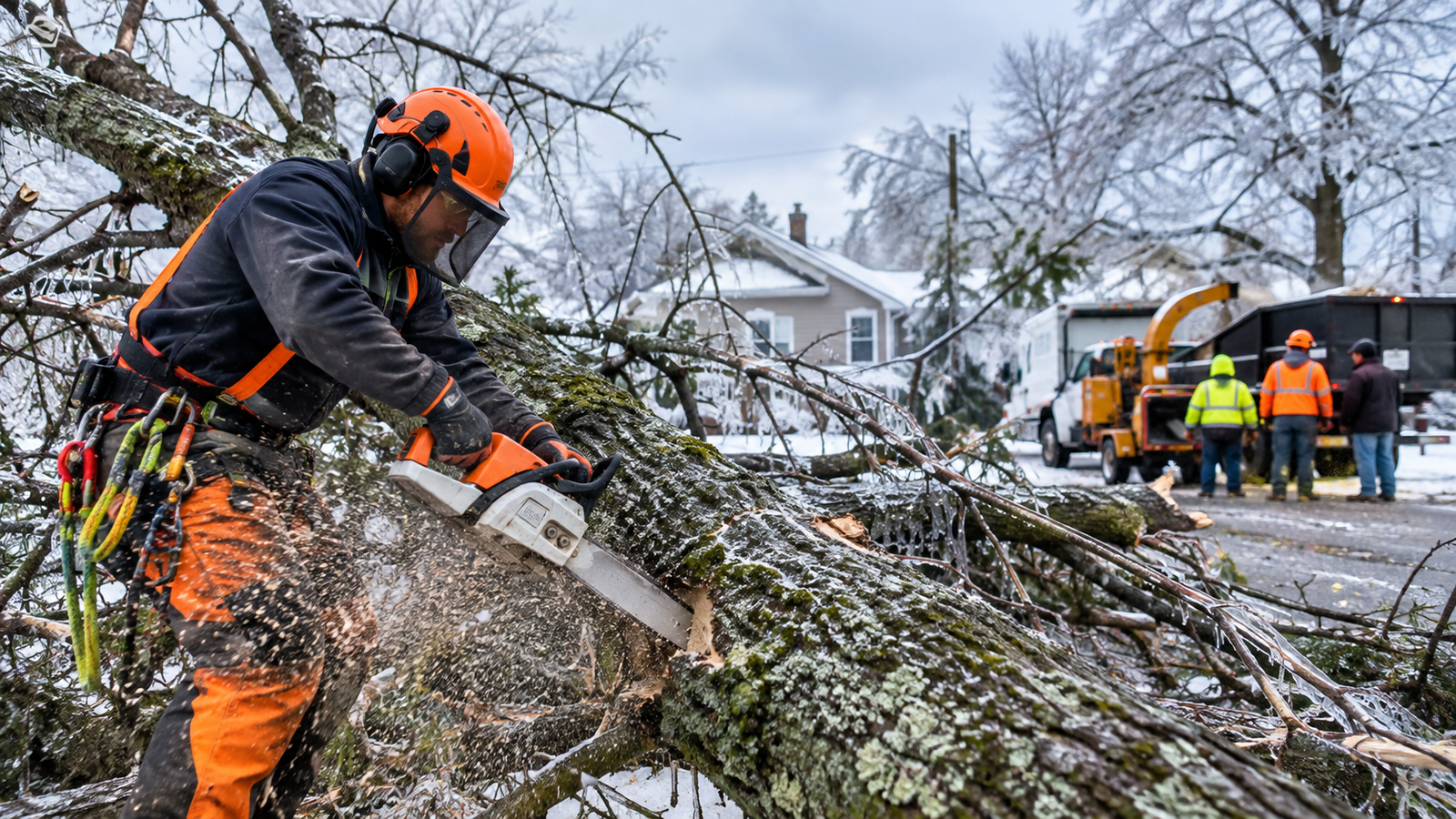
Severe weather can turn a healthy-looking tree into a serious property hazard in a matter of minutes. In Buffalo, NY, strong winds, heavy snowfall, ice accumulation, and saturated soil can cause branches to break, trunks to split, and entire trees to lean dangerously. When a storm damages a tree near your home, driveway, business, or power lines, knowing whom to call can make a significant difference in protecting people and property.
A local emergency arborist and a general tree removal crew may both provide tree care services, but their expertise and responsibilities can differ. An arborist focuses on tree health, structure, and risk assessment, while a general crew may specialize in physical removal, debris clearing, or routine tree work. Some companies offer both capabilities, making it important to understand the team’s qualifications and the nature of the emergency.
Nature Wise Tree Service serves property owners in Buffalo, NY, who need professional tree care guidance. This guide explains when an emergency arborist may be the right choice, when a general crew may be suitable, and how to respond safely when a storm damages a tree.
What Does a Local Emergency Arborist Do?
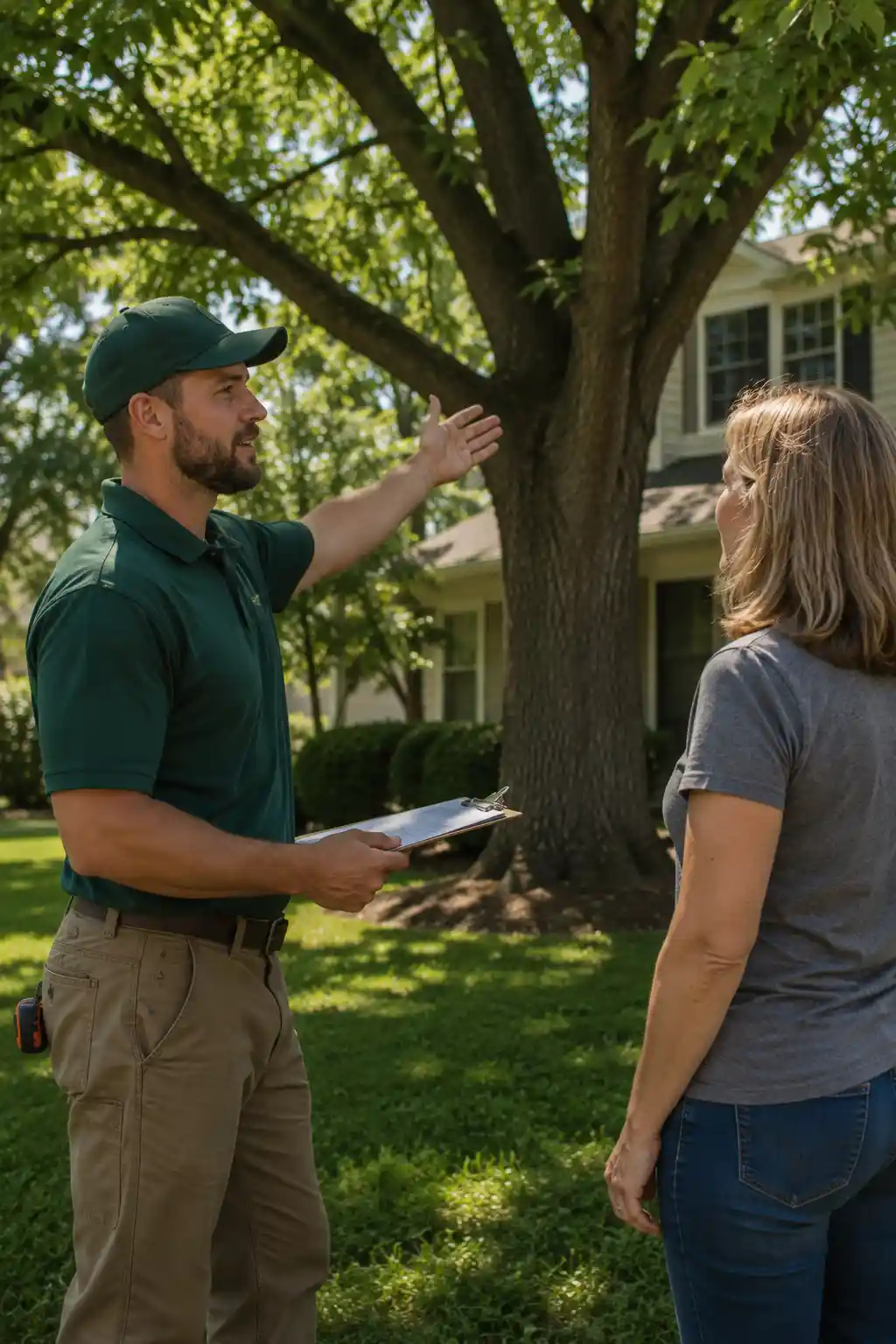
A local emergency arborist evaluates trees that have become hazardous because of storm damage, structural weakness, disease, or other conditions. The goal is to understand the immediate risk, determine what action is appropriate, and help protect people and surrounding property.
An arborist may assess a split trunk, a partially uprooted tree, hanging branches, damaged roots, or a tree leaning toward a building. The assessment considers the tree’s condition, location, stability, and likelihood of causing further damage.
Not every storm-damaged tree needs to be removed. Depending on the circumstances, appropriate action may involve pruning damaged branches, removing a hazardous section, arranging controlled tree removal, or restricting access until a specialist can complete the work.
For urgent situations, look for a provider with relevant emergency experience, appropriate equipment, and a clear safety plan. If a tree is near electrical infrastructure, specialized coordination may be necessary before any tree work begins.
A qualified arborist can also explain whether a tree may be preserved or whether removal is the safer option. This is particularly valuable when a large tree has suffered damage but its long-term condition is not immediately obvious.
What Is a General Tree Crew Responsible For?
A general tree crew typically performs practical tree care tasks such as trimming, branch removal, tree cutting, debris cleanup, and removal of trees that can be handled safely with the team’s equipment and training.
For example, a crew may be suitable when a storm has scattered small branches across a lawn, brought down a manageable tree in an open area, or left a damaged tree that has already been assessed and cleared for removal.
However, not every crew has the same qualifications. Some general tree service companies employ experienced climbers, trained saw operators, and arborists. Others may focus on limited maintenance or basic cleanup.
The important question is not simply whether a company calls itself a tree crew. Ask whether its personnel have the training, equipment, insurance, and experience needed for the specific hazard on your property.
A crew without the appropriate qualifications should not attempt to handle a suspended trunk, a severely split tree, a tensioned branch, or a tree entangled with power lines.
Emergency Arborist Buffalo: When Should You Call One?
Searching for an emergency arborist Buffalo property owners can contact is especially important when a tree presents an immediate or uncertain safety risk.
Certain warning signs indicate that professional assessment should not be delayed.
A Tree Has Suddenly Started Leaning
A tree that develops a new lean after a storm may have experienced root failure or movement in the surrounding soil. Freshly disturbed ground, lifted roots, or a change in the tree’s position can indicate instability.
Keep people and vehicles away from the affected area. Do not attempt to pull the tree upright, cut its roots, or remove nearby branches yourself.
The Trunk Has Split
A deep crack or split in the trunk can compromise the tree’s structural integrity. Strong winds may worsen the damage, especially if a major section remains attached but unstable.
An experienced emergency tree professional can evaluate the situation and determine the safest response. Depending on the tree’s location and condition, this may involve controlled removal or another risk management measure.
Large Branches Are Hanging Over a Building
Broken branches suspended in the canopy can fall without warning. Branches above roofs, garages, public walkways, and parked vehicles pose additional concerns because people or property may be directly beneath them.
Do not stand below a hanging branch or attempt to dislodge it with a pole. Keep the area clear until trained professionals can assess the hazard.
A Tree Has Fallen on a Structure
A fallen tree can damage roofs, windows, fences, and other structures. Even when the trunk appears stationary, internal stresses and shifting debris may create additional hazards.
If the tree has damaged a building, avoid entering affected areas when structural safety is uncertain. Contact emergency services if anyone is in danger, and arrange a qualified tree service for the tree-related work.
A Tree Is Near a Power Line
Treat every downed or contacted electrical line as energized. Stay well away from the tree, branches, and surrounding ground, and contact the utility company or emergency services as appropriate.
Do not touch the tree or attempt to move branches away from a line. Ordinary tree crews should not work on trees entangled with energized electrical infrastructure unless the work is performed under the appropriate utility safety procedures.
Local Emergency Arborist vs. General Crew: Key Differences
Choosing the right provider depends on the hazard, not simply the size of the tree. Both arborists and general tree crews may be involved in an emergency, but their roles can vary.
Tree risk assessment: An arborist with suitable qualifications can evaluate tree structure, visible damage, and potential hazards. A general crew may focus primarily on the work needed to remove or clear the tree.
Tree preservation: When a storm-damaged tree may be salvageable, arboricultural knowledge can help determine whether pruning or another intervention is appropriate. Removal may still be necessary if the tree presents an unacceptable risk.
Hazardous removal: A qualified emergency removal crew can manage difficult cutting and rigging tasks when it has the appropriate training, personnel, and equipment. An arborist’s title alone does not guarantee expertise in every removal technique.
Routine cleanup: A general crew may be suitable for clearing manageable branches, removing debris, or handling straightforward removal jobs in open spaces.
Complex emergencies: Trees near buildings, severely split trunks, suspended branches, unstable root systems, and restricted access areas require careful planning. Choose a provider with demonstrated experience in the specific conditions involved.
In many cases, the best choice is a tree service company that combines knowledgeable assessment with a properly trained removal team. Ask who will evaluate the hazard and who will carry out the work before approving the job.
Does a 24/7 Arborist Make a Difference During a Storm?
A 24/7 arborist or emergency tree service may be valuable when a storm creates an urgent hazard outside normal business hours. However, not every tree problem requires immediate nighttime work, and not every company advertising emergency service has an arborist available at all times.
Prioritize the severity of the risk. A tree resting on a house, a fresh split above a public entrance, or a major limb threatening occupied space may require urgent professional attention. A fallen branch in an unused part of the yard may be less urgent if it poses no immediate danger.
When contacting an emergency provider, explain what happened, where the tree is located, whether it is touching a structure, and whether electrical lines are involved. Photographs taken from a safe distance may help the provider understand the situation.
Ask about response availability, the immediate safety measures recommended, the expected scope of work, and how pricing is determined. During widespread storms, demand may be high, so a company should communicate realistic expectations rather than promise a response it cannot deliver.
Never put yourself at risk to obtain photographs or inspect a damaged tree more closely.
What to Look for in a Certified Emergency Tree Expert
When a tree presents a serious hazard, qualifications and safety practices matter as much as availability. A certified emergency tree expert is not a universal credential, so verify the actual qualifications held by the individual who will assess or perform the work.
An ISA Certified Arborist has met the International Society of Arboriculture’s certification requirements. This credential can be useful when you need informed guidance on tree condition and risk, but it does not automatically establish that someone is trained for every emergency removal task.
Before hiring a provider, consider the following:
- Relevant experience: Ask about previous work involving storm-damaged trees, unstable trunks, or trees near buildings.
- Insurance: Request proof of current liability insurance and applicable workers’ compensation coverage.
- Safety procedures: Ask how the team will control falling branches, establish exclusion zones, and protect nearby property.
- Equipment: Confirm that the company has appropriate equipment for the tree’s size, location, and condition.
- Written scope: Understand the planned work, debris removal, stump services, and potential additional charges.
- Clear communication: A professional should explain the hazard, proposed response, and limitations without pressuring you into unnecessary work.
For complex situations, you can ask whether an arborist will assess the tree before the removal crew begins. This helps clarify who is responsible for evaluating risk and making recommendations.
Emergency Tree Removal in Buffalo NY: What to Expect
Emergency tree removal in Buffalo NY may involve additional planning because storm-damaged trees can be unstable and access conditions may be difficult. The exact process depends on the tree’s condition, its location, and the immediate danger.
First, the provider gathers information about the damage and identifies obvious hazards. The team then determines whether the site can be approached safely and what equipment or specialist coordination is required.
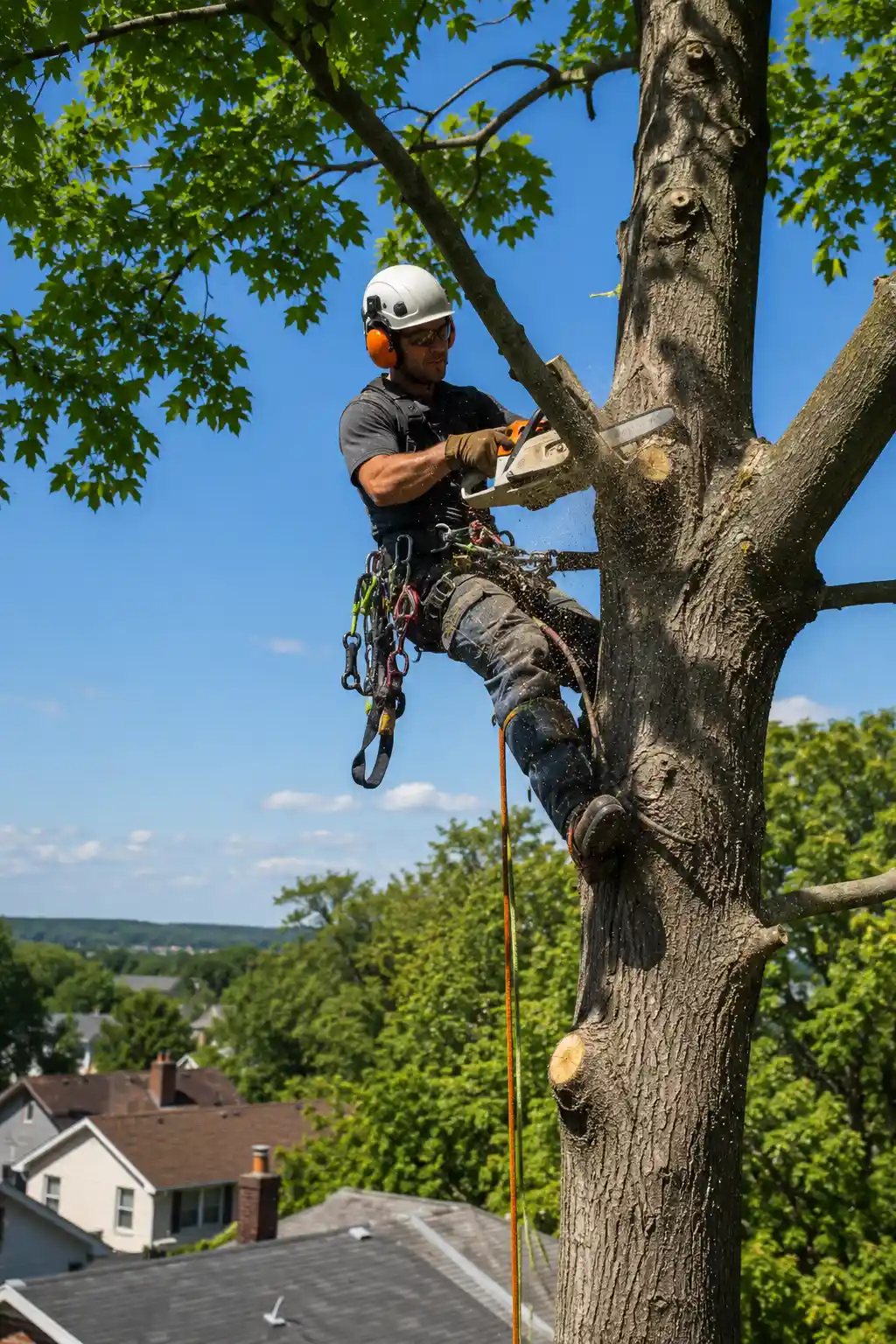
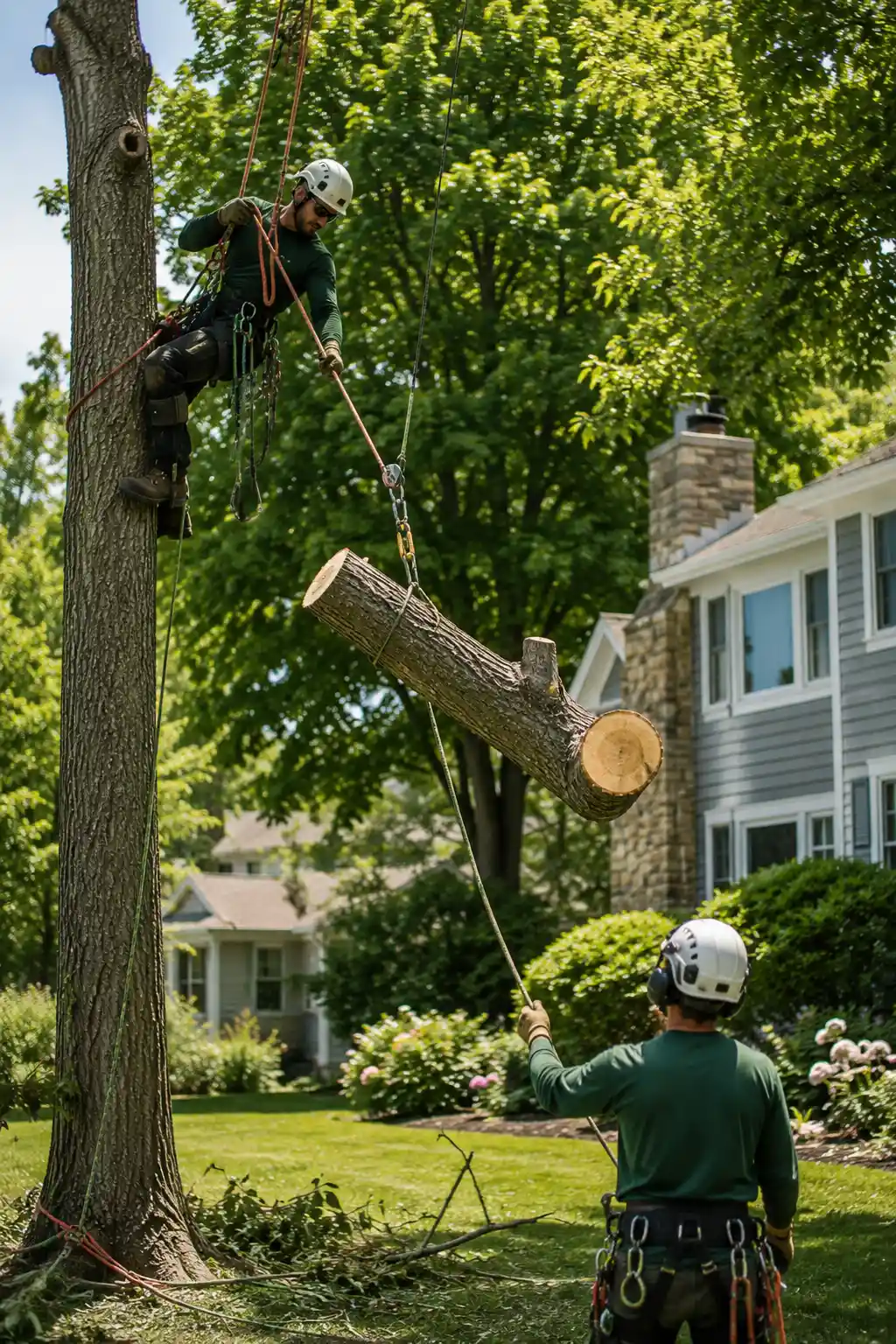
If removal is appropriate, the crew establishes a controlled work area and plans how to dismantle or remove the tree. Large trees near structures may need to be removed in sections rather than felled in one piece.
After the hazard is addressed, the service agreement determines whether the crew will haul away branches and trunk sections, chip debris, grind the stump, or provide additional cleanup. These tasks may be priced separately.
Emergency work can cost more than scheduled removal because it may involve urgent mobilization, hazardous conditions, specialized equipment, and difficult access. Ask for a clear explanation of the expected work and charges whenever circumstances allow.
Remember that the immediate priority is safety. Avoid approaching unstable trees or attempting temporary repairs before a qualified professional has evaluated the situation.
Preventing Tree Emergencies Before the Next Buffalo Storm
Not every tree failure can be predicted, but regular care can help identify some problems before severe weather arrives.
Schedule periodic inspections for mature trees, particularly those close to homes, garages, driveways, and walkways. Look for dead branches, visible trunk cracks, unusual leaning, root disturbance, and signs of declining health.
Professional pruning may help remove certain hazardous branches and improve tree structure when performed appropriately. Avoid excessive pruning or topping, which can damage trees and create future maintenance problems.
After heavy snowfall, ice accumulation, or strong winds, inspect your property from a safe location. Do not climb onto roofs or approach hanging branches to investigate possible damage.
Property owners should also know whom to contact before a storm occurs. Keeping the contact information for a reputable local tree service readily available can make it easier to respond when urgent work is needed.
Contact Nature Wise Tree Service for Tree Care in Buffalo
When a storm damages a tree, choosing the right professional begins with understanding the risk. A local emergency arborist may be the right choice for evaluating tree stability and determining whether removal is necessary. A qualified general crew may be suitable for manageable cleanup or removal when the hazard and required work are clearly understood.
For severe damage, complex removals, or trees near buildings and utilities, prioritize relevant experience, proper insurance, and a clear safety plan rather than choosing a provider based only on price or availability.
Nature Wise Tree Service serves property owners in Buffalo, NY, with professional tree care solutions. If a storm has damaged a tree on your property, visit www.naturewisetreecare.com to learn more about available services and discuss your tree care needs.
Taking the right steps early can help protect your family, property, and landscape while supporting safer decisions during Buffalo’s challenging storm season.
Frequently Asked Questions
Should I call an arborist or a general tree crew after a storm?
Contact a qualified emergency tree service if a tree is unstable, split, leaning suddenly, or threatening a building. An arborist can assess tree condition and risk, while a properly trained crew can carry out removal or cleanup. Some companies provide both services.
What qualifies as a tree emergency?
A tree emergency may include a tree that has fallen on a structure, a newly unstable or uprooted tree, a severely split trunk, or large hanging branches threatening people or property. Trees involving power lines require immediate distance and utility coordination.
Is a 24/7 arborist available for every storm emergency?
Availability varies by company. Some providers offer round-the-clock emergency calls, while others operate on limited schedules or prioritize the most hazardous situations. Confirm availability and response expectations directly with the service provider.
Does every storm-damaged tree need to be removed?
No. Some trees can be managed through appropriate pruning or other care. The decision depends on the severity of the damage, structural stability, location, and risk to people or property. A qualified professional can recommend the appropriate course of action.
How much does emergency tree removal cost in Buffalo, NY?
Pricing depends on tree size, damage, accessibility, nearby structures, equipment requirements, urgency, and cleanup needs. Hazardous removals may cost more than routine jobs. Request a clear estimate describing the work and any additional charges.
What should I do if a tree falls on my house?
Keep people away from the affected area and avoid entering any part of the building where structural damage may have occurred. If anyone is in immediate danger, contact emergency services. Arrange qualified tree assistance and never attempt to move a loaded or unstable tree yourself.
Can an arborist help save a damaged tree?
Yes, in some circumstances. An arborist can evaluate the tree’s structure and condition and determine whether pruning, monitoring, or other care may be appropriate. If the damage creates an unacceptable risk, removal may be recommended.
How can I choose a reliable emergency tree service in Buffalo?
Verify insurance, ask about storm response experience, review the proposed safety procedures, and confirm the work included in the estimate. For complex tree health or structural concerns, ask whether a qualified arborist will assess the tree before removal.