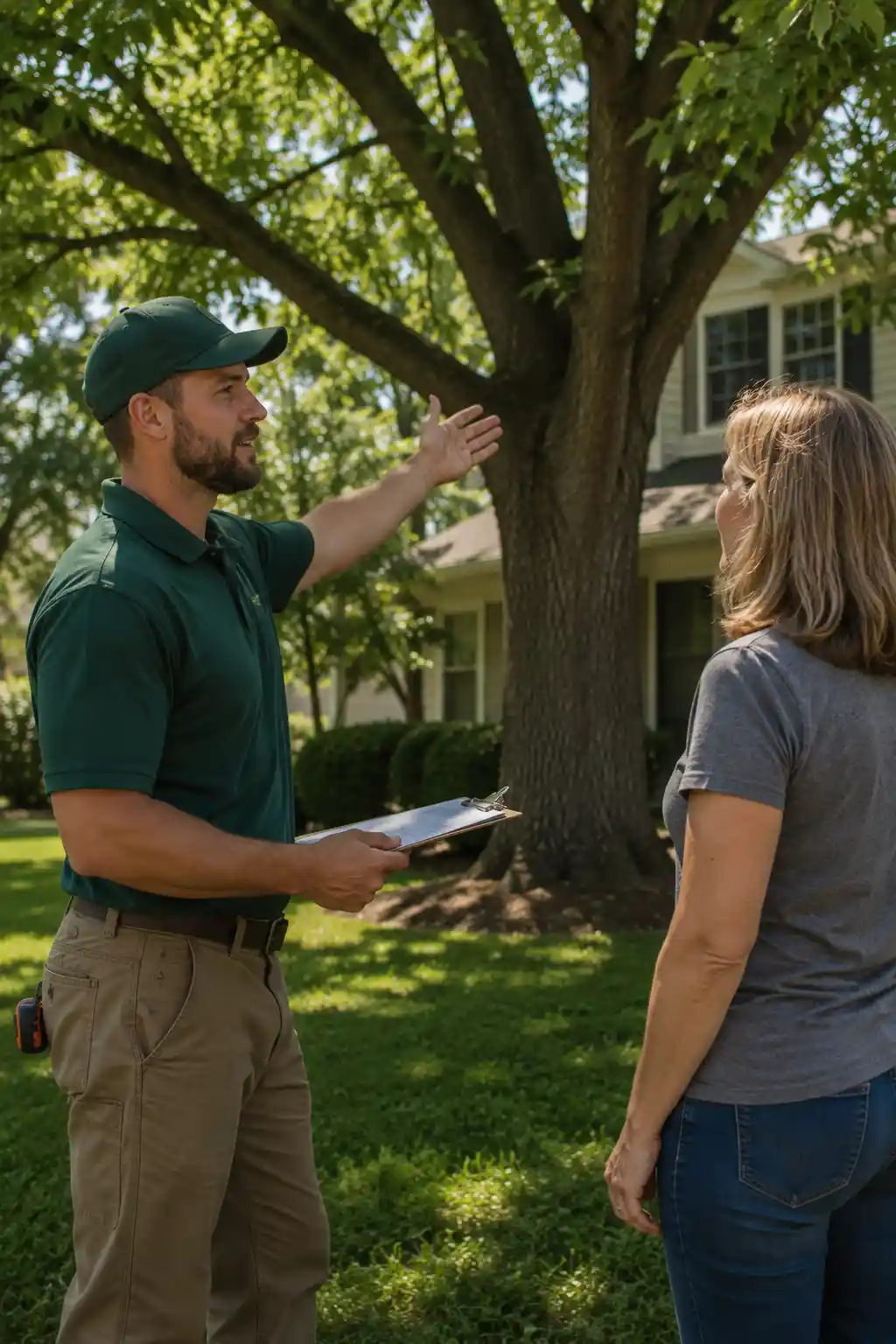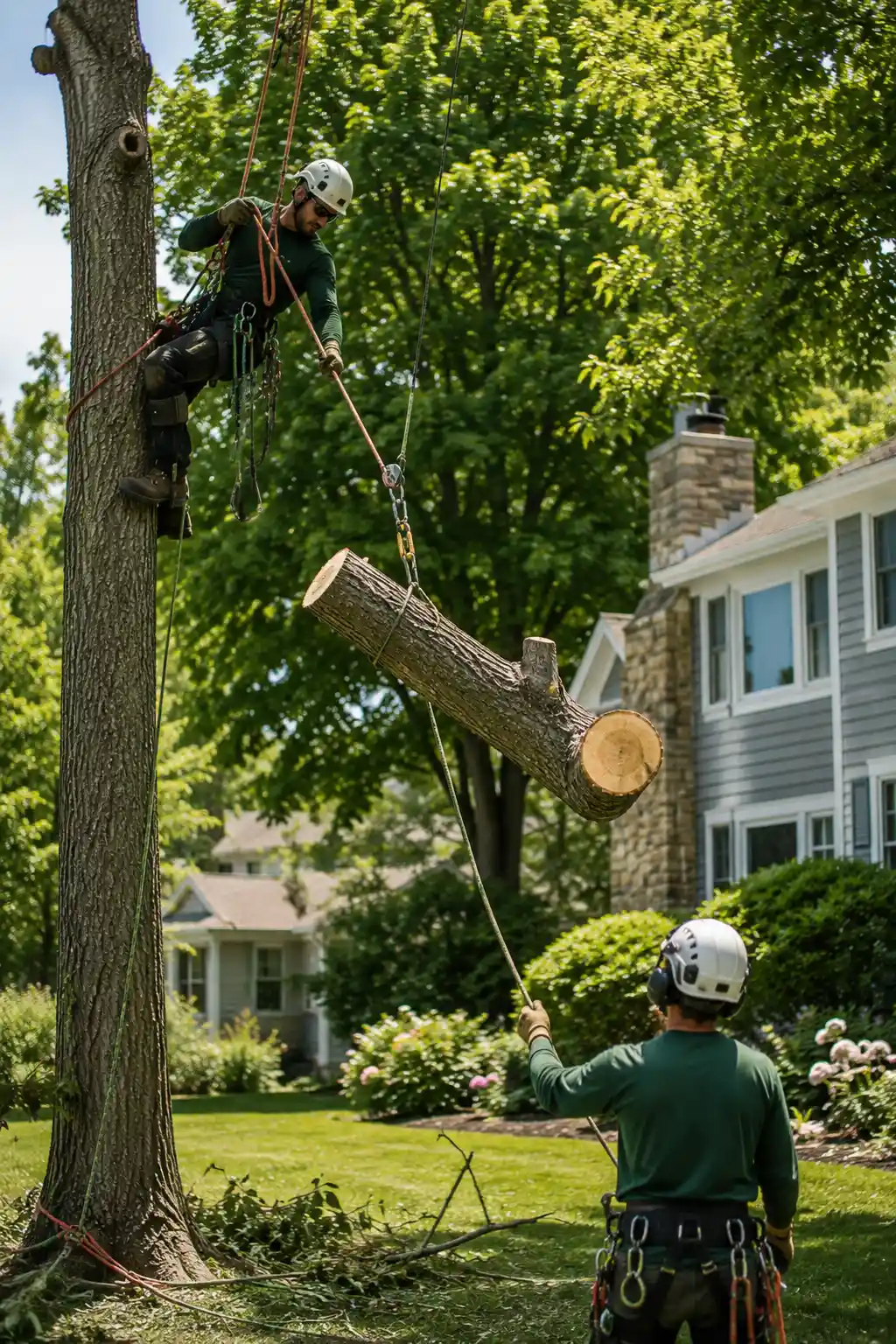
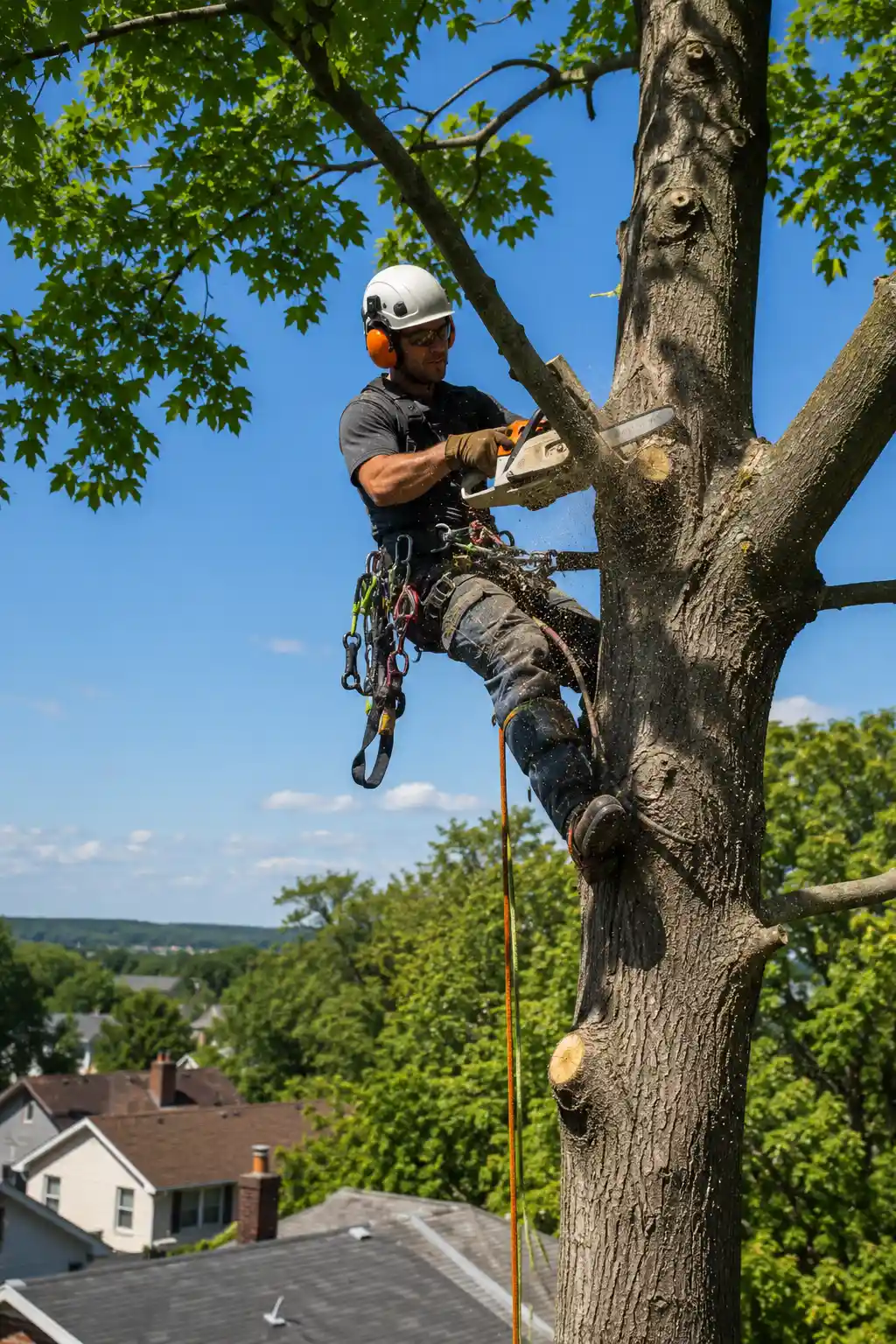
Healthy trees are an asset — shade, privacy, property value. But a failing tree over your house is a liability that gets more expensive the longer it stands. The good news: trees almost never fall without warning. Here are the eight signs we look for on every inspection in Buffalo and Western New York.
1. Mushrooms or fungus at the base
Shelf fungus, honey-colored mushrooms, or conks growing from the trunk or root flare are the classic sign of internal decay. By the time fruiting bodies appear on the outside, rot has usually been working inside for years. This is the sign we take most seriously.
2. A new or increasing lean
Trees can grow leaning and be perfectly stable. What's dangerous is change — a tree that leans more than it did last season, or soil lifting and cracking on the side opposite the lean. That's root-plate movement, and it means the tree is actively failing. Treat it as urgent.
3. Large dead branches ("widow-makers")
Big leafless limbs in an otherwise green canopy drop without warning — arborists call them widow-makers for a reason. Deadwood over driveways, play areas, or roofs should come down promptly, even if the rest of the tree is savable with professional pruning.
4. Cracks and splits in the trunk
Vertical cracks, especially where two trunks meet in a tight "V" (called included bark), are structural failures in progress. Buffalo's wind and ice load finds these weak points every winter. Some split-prone trees can be preserved with cabling and bracing instead of removal — an inspection tells you which side of the line you're on.
5. Hollow or soft spots in the trunk
Tap the trunk in a few spots. A hollow sound, crumbly bark, or soft punky wood means decay has moved into the structural wood. A tree can stand for years with some hollowing — the question is how much sound wood remains, which is exactly what a professional assessment measures.
6. Thinning canopy or dieback at the top
When a tree starts dying from the top down — sparse leaves, bare outer branches, undersized foliage — it's usually a root problem showing up in the crown. Sometimes that's drought stress a tree can recover from; sometimes it's girdling roots or root rot that can't be reversed.
7. Bark falling off in sheets
Missing bark, or bark shedding in large plates with smooth dead wood underneath, means that section of the tree is no longer alive. Small patches can compartmentalize; large areas of the main trunk usually can't.
8. Storm damage that "mostly" survived
A tree that lost a major limb or got visibly rocked in a storm may look fine afterward while hiding cracked unions and torn roots. After a big blow, it's worth a quick professional look — especially before the next one. (Here's what to do right after storm damage.)
Get a straight answer, free
If your tree is showing any of these signs, we'll come look at it, tell you honestly whether it can be saved, and leave you a written quote if it can't. Call (716) 442-8733 or request your free estimate below.