On This Page +
- When Should You Consider Tree Removal in Buffalo, NY?
- Understanding the Tree Removal Process
- What Affects Tree Removal Cost in Buffalo, NY?
- How to Find Affordable Tree Removal Buffalo NY Homeowners Can Trust
- When Are Arborist Services in Buffalo Necessary?
- Buffalo Weather and Preventive Tree Care
- Choose Nature Wise Tree Service for Your Tree Removal Needs
- Frequently Asked Questions
Trees add beauty, shade, privacy, and value to residential and commercial properties. However, when a tree becomes diseased, structurally unstable, severely damaged, or dangerously close to a building, removal may become the safest option. For property owners in Buffalo, NY, making the right decision requires understanding the condition of the tree, the removal process, the potential costs, and the importance of hiring a qualified crew.
Professional tree removal Buffalo NY services help property owners address hazardous trees while protecting nearby homes, driveways, landscaping, and other structures. Buffalo’s seasonal weather, including strong winds, heavy snow, and ice accumulation, can place additional stress on trees with existing weaknesses. Recognizing warning signs early can help you plan necessary work before a manageable concern becomes an emergency.
Nature Wise Tree Service helps Buffalo-area property owners address tree care needs and evaluate removal options. This guide explains when removal may be necessary, how the process works, what affects pricing, and how to choose a safe and dependable tree removal company.
When Should You Consider Tree Removal in Buffalo, NY?
Not every damaged or unattractive tree needs to be removed. In some cases, professional pruning, treatment, or structural support may help preserve the tree. However, certain conditions require a closer assessment by a qualified tree care professional.
Dead or Declining Trees
A dead tree can become increasingly brittle as it deteriorates. Large branches may break without warning, while weakened trunks and roots can compromise the tree’s stability. If a tree has extensive deadwood, significant decay, or a declining structure, an assessment can help determine whether removal is appropriate.
Trees With Significant Structural Damage
Deep trunk cracks, major cavities, damaged root systems, and substantial leaning may indicate structural problems. A tree that suddenly begins leaning, especially after a storm, deserves prompt professional attention.
Leaning alone does not automatically mean a tree must be removed. The direction of the lean, root condition, soil movement, and other signs of instability all matter when evaluating risk.
Storm-Damaged Trees
Buffalo weather can expose trees to strong winds, heavy snow, and ice accumulation. These conditions may break large limbs, split trunks, or damage roots. A severely damaged tree near a house, garage, sidewalk, or parking area may require urgent evaluation.
Keep your distance from hanging branches and unstable trees after a storm. If a tree contacts an electrical line, stay away and contact the utility company or emergency services as appropriate.
Trees Threatening Buildings or Access Areas
Trees growing close to buildings, driveways, utility lines, or frequently used walkways may create maintenance or safety concerns. Sometimes pruning can address the problem. In other situations, the tree’s condition or location may make removal the more appropriate solution.
A professional assessment helps determine which option addresses the actual risk without removing a healthy tree unnecessarily.
Understanding the Tree Removal Process
A professional tree removal service Buffalo NY property owners hire should begin with a clear evaluation and a plan for completing the work safely. Although every project is different, most removals follow several important stages.
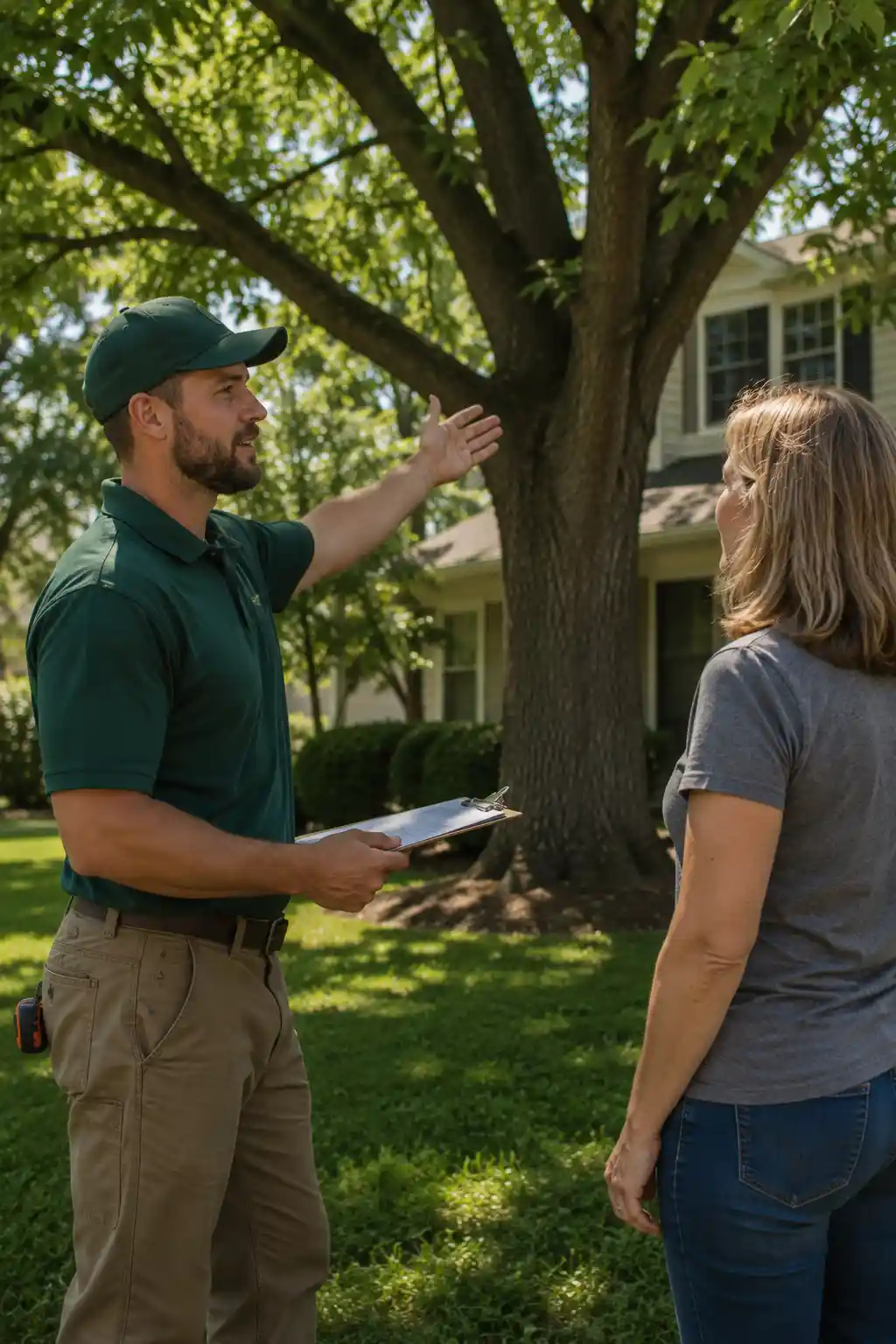
Step 1: Tree Assessment and Site Inspection
The first step is examining the tree’s size, condition, location, and surrounding environment. The crew evaluates the trunk, branches, visible root area, and potential hazards.
The inspection should also identify nearby buildings, fences, landscaping, vehicles, sidewalks, and overhead utilities. These details help determine the safest removal method and the equipment required.
If the tree appears healthy but has a location-related concern, ask whether pruning or another management option could resolve the issue.
Step 2: Planning and Property Preparation
Before cutting begins, the crew establishes a work area and identifies potential drop zones. The removal plan accounts for the tree’s height, natural lean, structural condition, and nearby obstacles.
The property owner should move vehicles and outdoor belongings away from the work area when possible. Children, pets, and bystanders must remain outside the designated safety zone.
Depending on the location, equipment access and coordination with utility providers may also be necessary.
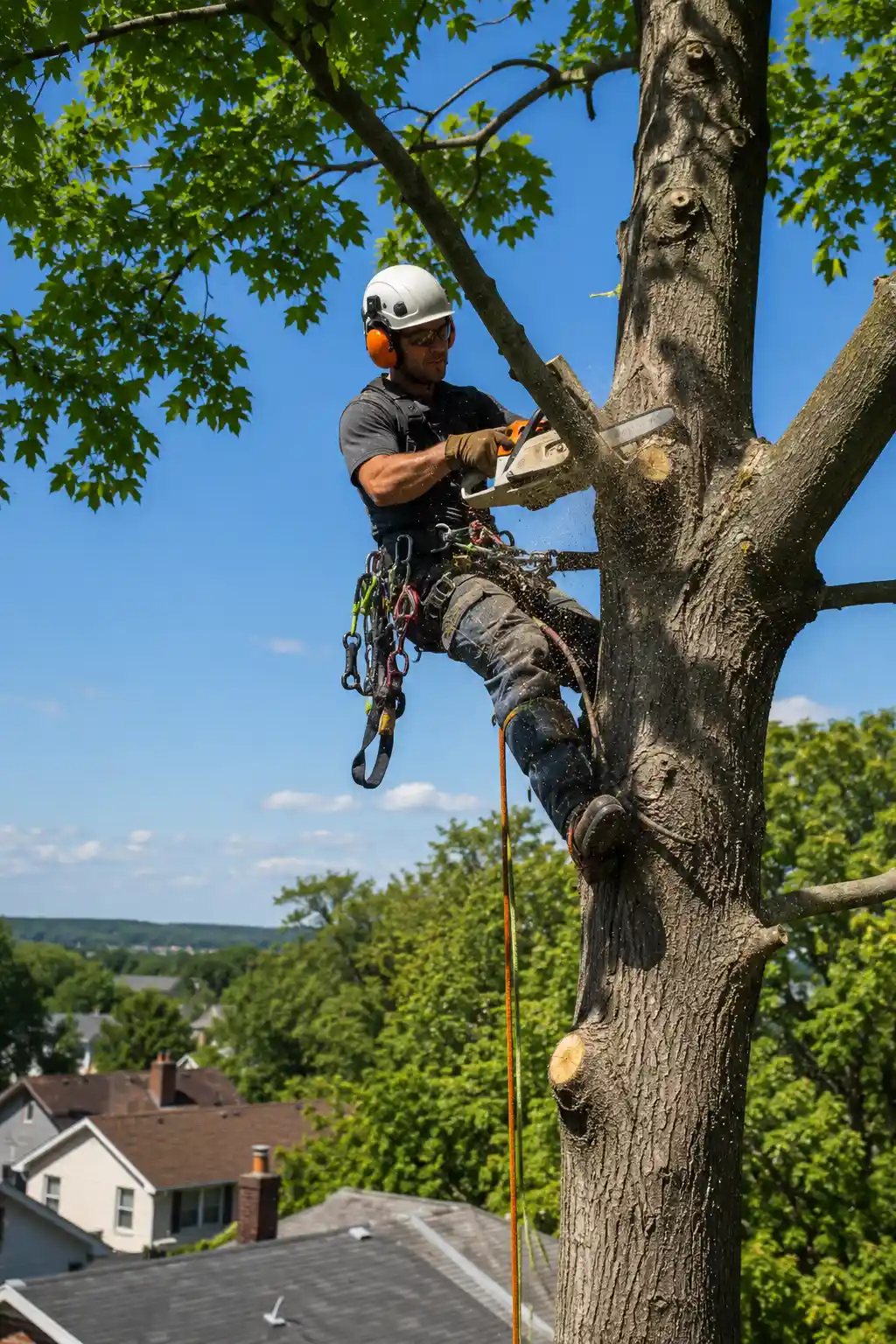
Step 3: Controlled Tree Removal
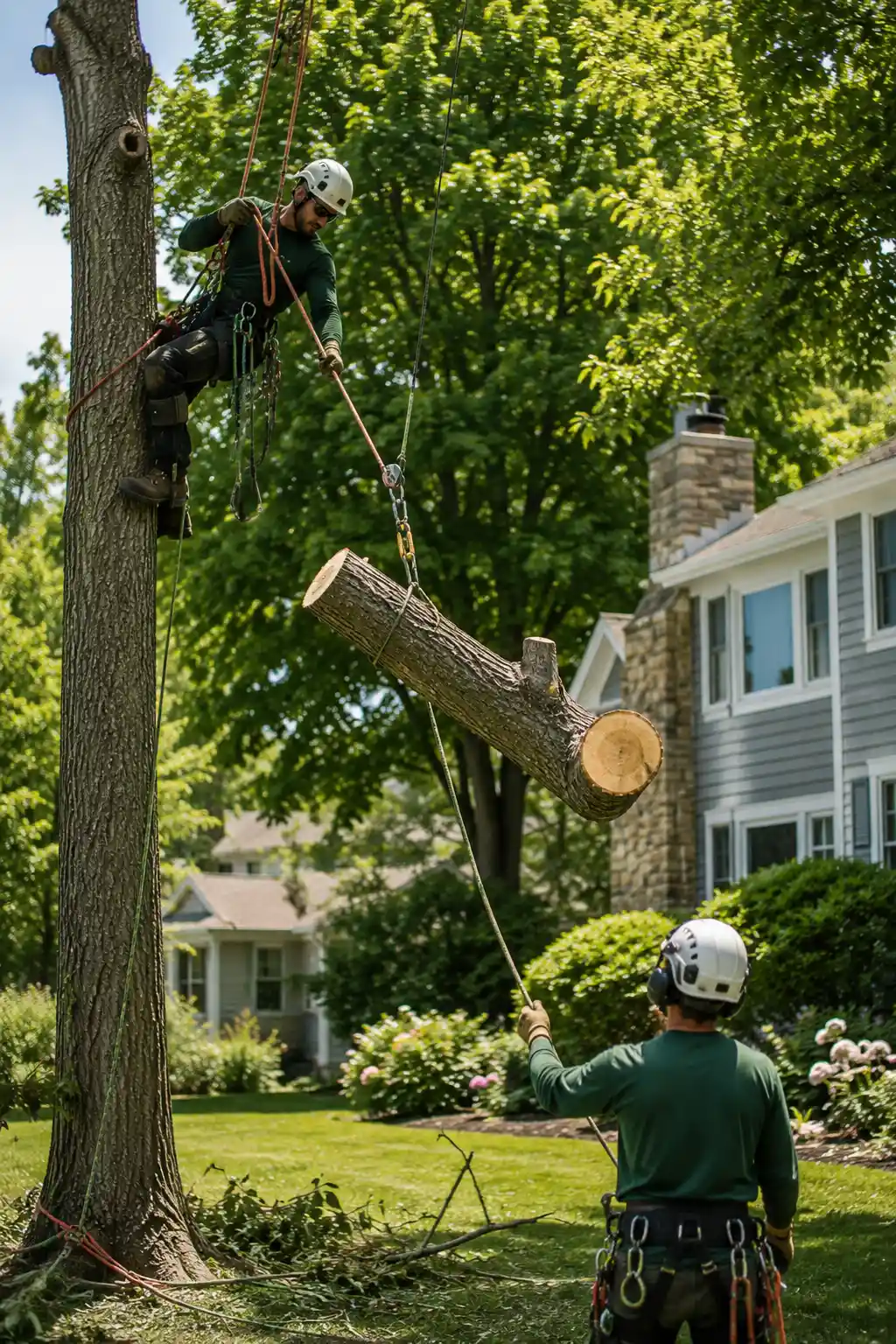
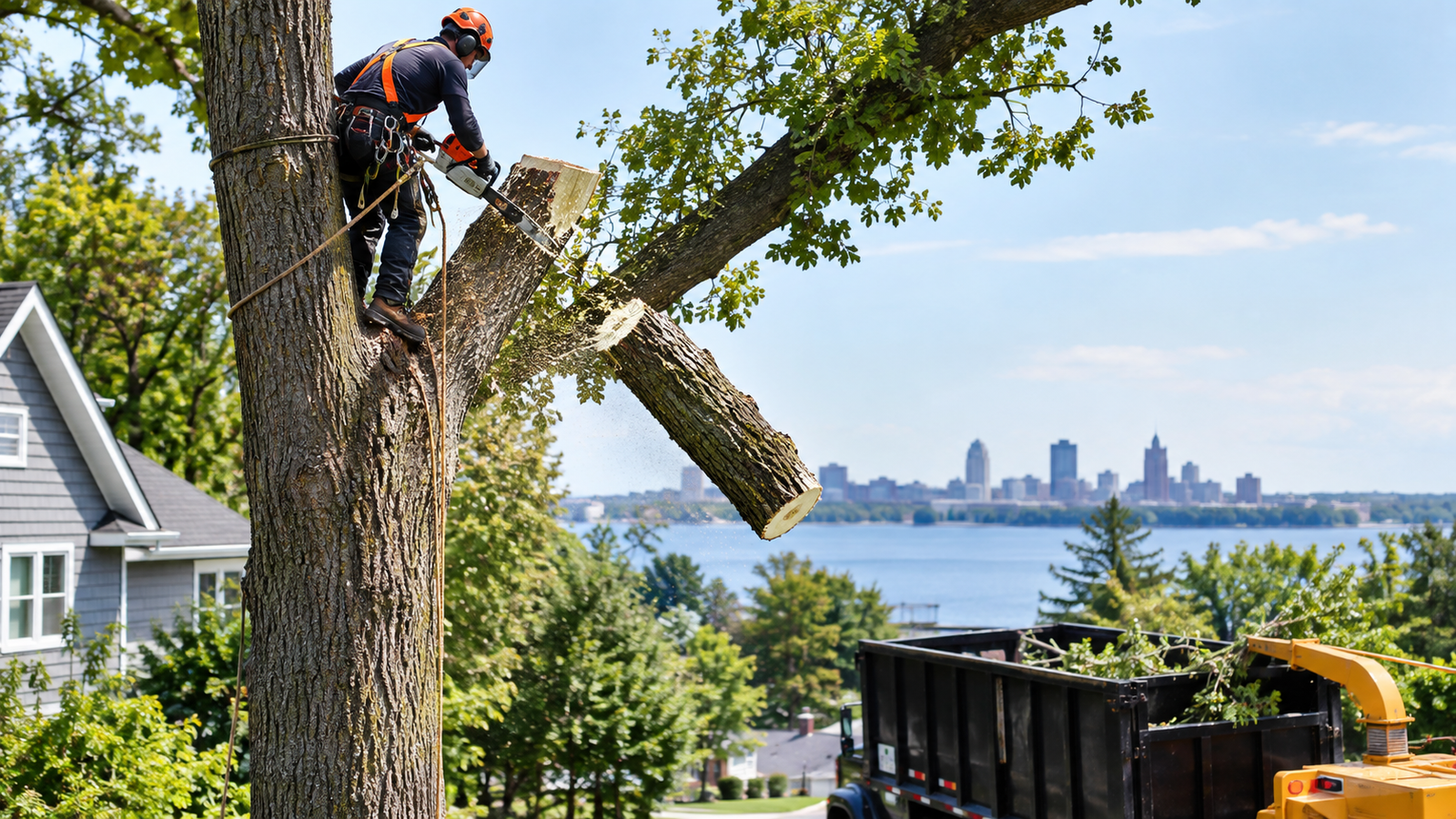
Small trees in open areas may sometimes be removed using a controlled felling method. Larger trees or trees near structures often require sectional dismantling, where branches and trunk sections are removed in stages.
Professional crews use suitable climbing equipment, rigging systems, lifts, or cranes when site conditions require them. These methods help control falling material and reduce the risk of damage to surrounding property.
Tree removal involves serious hazards, so homeowners should not attempt to cut large, unstable, or elevated trees themselves.
Step 4: Debris Management and Cleanup
Once the tree has been removed, branches and trunk sections must be processed and handled according to the agreed service plan. Depending on the project, the crew may chip branches, cut wood into manageable sections, or haul debris away.
Confirm what cleanup includes before work begins. Some estimates include complete debris removal, while others may leave firewood or wood chips for the property owner.
Step 5: Stump Grinding and Final Inspection
Removing the trunk does not necessarily remove the stump. Stump grinding is a separate service that reduces the remaining stump below the surrounding ground level, subject to site conditions and the agreed depth.
After grinding, the area may need soil, grading, or additional landscaping work. Ask whether these services are included or require a separate estimate.
A final inspection helps confirm that the agreed work has been completed and that debris has been handled as discussed.
What Affects Tree Removal Cost in Buffalo, NY?
The tree removal cost for a property depends on more than the height of the tree. Two trees of similar size can require different equipment, labor, and safety precautions depending on their condition and location.
The most important pricing factors include the following.
Tree Size and Species
Larger trees generally require more labor, equipment, and time to remove. Trunk diameter, branch spread, wood characteristics, and the tree’s overall structure can also influence the work involved.
A small tree in an open yard may be relatively straightforward to remove, while a mature tree with a wide canopy may require a more complex approach.
Location and Accessibility
Trees positioned near homes, garages, fences, sheds, or utility lines can be more difficult to remove. Limited access may prevent equipment from reaching the work area easily, requiring additional labor or specialized machinery.
Trees overhanging buildings or neighboring properties may also require careful sectional dismantling.
Tree Condition and Urgency
Dead, decayed, split, or storm-damaged trees can be unpredictable. A crew may need additional precautions to manage unstable branches and compromised wood.
Emergency work may also cost more than a scheduled removal because of urgency, difficult conditions, and equipment availability.
Stump Grinding and Debris Removal
The estimate should clarify whether it covers only the tree’s above-ground removal or also includes stump grinding, wood chipping, hauling, and site cleanup.
If you plan to install new grass, create a garden bed, or replant a tree, ask what additional work will be needed to prepare the area.
Permits and Special Requirements
Permit requirements can vary depending on the property’s location and the circumstances of the removal. Before proceeding, confirm whether local rules, property restrictions, or utility considerations apply.
The most reliable way to understand your project’s price is to request an on-site assessment and a written estimate that explains the scope of work.
How to Find Affordable Tree Removal Buffalo NY Homeowners Can Trust
Searching for affordable tree removal Buffalo NY services is understandable, especially when a large tree requires specialized equipment. However, the lowest quote is not always the best value if it excludes important work or does not adequately address safety.
Use these steps to compare companies more confidently.
Request Detailed Written Estimates
Ask each provider to describe the planned removal method, cleanup arrangements, stump services, and any additional charges. Comparing similar scopes of work makes it easier to understand pricing differences.
A written estimate should clearly explain what is included and identify work that may cost extra.
Verify Insurance Coverage
Tree removal can involve falling limbs, heavy equipment, and potential property damage. Ask the company for proof of appropriate liability insurance and workers’ compensation coverage.
Confirm that the coverage is current and appropriate for the work being performed. Do not rely only on verbal assurances.
Review Experience and Safety Practices
Ask how the crew plans to handle the tree’s location, condition, and surrounding obstacles. A professional provider should be able to explain the removal approach and the precautions needed for the specific property.
For complex or high-risk trees, consider seeking an assessment from an ISA Certified Arborist. Certification can help demonstrate relevant arboricultural knowledge, but you should still verify the provider’s experience, insurance, and proposed work plan.
Check Reviews and Communication
Read recent customer feedback and look for consistent comments about communication, cleanup, punctuality, and professionalism. Ask questions before signing an agreement and make sure you understand the schedule and payment terms.
Avoid choosing a company solely because it promises the fastest removal or the lowest price.
When Are Arborist Services in Buffalo Necessary?
Professional arborist services Buffalo property owners seek can help them understand whether a tree should be removed, pruned, monitored, or treated.
An arborist evaluates tree structure, health, growing conditions, and potential hazards. This assessment can be particularly valuable when a tree has visible decay, unexplained decline, root damage, or branches extending over structures.
An arborist may recommend removal when a tree presents an unacceptable risk that cannot reasonably be addressed through pruning or other care. In other cases, preserving the tree may remain possible.
Before authorizing removal, consider asking:
- What specific condition makes the tree hazardous?
- Could pruning or another treatment address the problem?
- Are there signs of root instability or significant decay?
- Does the tree’s location increase the risk to people or property?
- What precautions will be necessary during the work?
These questions support informed decisions and help ensure that removal is based on the tree’s condition and circumstances rather than appearance alone.
Buffalo Weather and Preventive Tree Care
Seasonal maintenance can help property owners identify tree problems before severe weather increases the risk of failure. Buffalo’s winters can place considerable weight on branches, while strong winds and saturated soil may contribute to tree instability.
Inspect trees periodically for dead branches, damaged limbs, unusual leaning, visible root movement, and changes in trunk condition. Pay attention after major storms, but avoid approaching trees that appear unstable.
Routine pruning may help manage certain branch-related risks, while professional assessments can identify problems that are not obvious from the ground. However, no maintenance plan can guarantee that a tree will never fail during extreme weather.
If a tree shows concerning signs, arrange a professional evaluation rather than waiting for the next storm. Addressing suitable work in advance may provide more scheduling flexibility than waiting until the tree becomes an emergency.
Choose Nature Wise Tree Service for Your Tree Removal Needs
Removing a tree is an important property decision that deserves careful planning. From identifying hazards and understanding pricing to selecting an appropriate removal method, each step contributes to a safer and more predictable project.
Nature Wise Tree Service serves property owners in Buffalo, NY, who need professional tree care solutions. Whether you are concerned about a declining tree, storm damage, structural instability, or a tree that conflicts with your property’s layout, start with an assessment of the situation.
Visit www.naturewisetreecare.com to learn more about available tree services and discuss your property’s needs. Request a clear estimate, confirm the scope of work, and ask about cleanup and stump options before scheduling.
The right approach can help you address tree-related concerns while protecting your home, landscaping, and the people who use your property.
Frequently Asked Questions
How do I know if a tree needs to be removed?
Dead branches, extensive decay, major trunk cracks, root damage, sudden leaning, and severe storm damage may indicate a problem. A qualified tree care professional can assess the condition and determine whether removal, pruning, or another solution is appropriate.
How much does tree removal cost in Buffalo, NY?
The cost depends on tree size, species, condition, accessibility, nearby structures, equipment needs, and cleanup requirements. Stump grinding and debris hauling may be additional services. Request an on-site estimate for pricing specific to your property.
How long does professional tree removal take?
A straightforward removal may take a few hours, while a large or hazardous tree near buildings may require substantially more time. Tree size, access, weather, equipment, and cleanup requirements all affect the schedule.
Is stump grinding included in tree removal?
Not always. Some companies include stump grinding in a package, while others quote it separately. Confirm whether the estimate covers the stump, wood chips, debris removal, and any soil restoration needed afterward.
Is it safe to remove a tree myself?
Removing large trees, climbing with chainsaws, handling unstable trunks, and working near power lines involve serious risks. These jobs should be handled by qualified professionals with appropriate training and equipment.
Can a damaged tree be saved instead of removed?
Sometimes. Depending on the tree’s condition, pruning, monitoring, or other treatment may address the problem. A professional assessment can help determine whether the tree can remain safely or whether removal is the more appropriate option.
Do I need permission to remove a tree in Buffalo, NY?
Requirements depend on the property’s location, ownership, and applicable local regulations. Check with the relevant municipality or property authority before proceeding, particularly if the tree is near a public right of way or subject to specific restrictions.
How can I choose a safe tree removal company?
Compare written estimates, verify insurance, review customer feedback, and ask about safety procedures and equipment. For complex tree health or structural concerns, consider consulting an ISA Certified Arborist. Confirm the removal method, cleanup, and stump services before work begins.