On This Page +
- What Is Tree Cutting and How Does It Work?
- When Should You Cut Down a Tree in Buffalo NY?
- Why Safe Tree Felling Requires Professional Planning
- Buffalo Weather and Tree Cutting Safety
- Tree Cutting Service Buffalo: What Happens During the Job?
- Tree Cutting vs. Tree Removal Buffalo NY
- What Factors Affect Tree Cutting Costs?
- What Happens to the Stump After Tree Cutting?
- How to Choose a Tree Service in Buffalo NY
- Why Choose Nature Wise Tree Service?
- Schedule Professional Tree Cutting in Buffalo NY
- Frequently Asked Questions
Trees add beauty, shade, privacy, and natural character to properties throughout Buffalo, NY. However, damaged, diseased, unstable, or poorly positioned trees can sometimes become serious safety concerns. Knowing when a tree needs professional attention can help homeowners protect their families, buildings, vehicles, and surrounding landscapes.
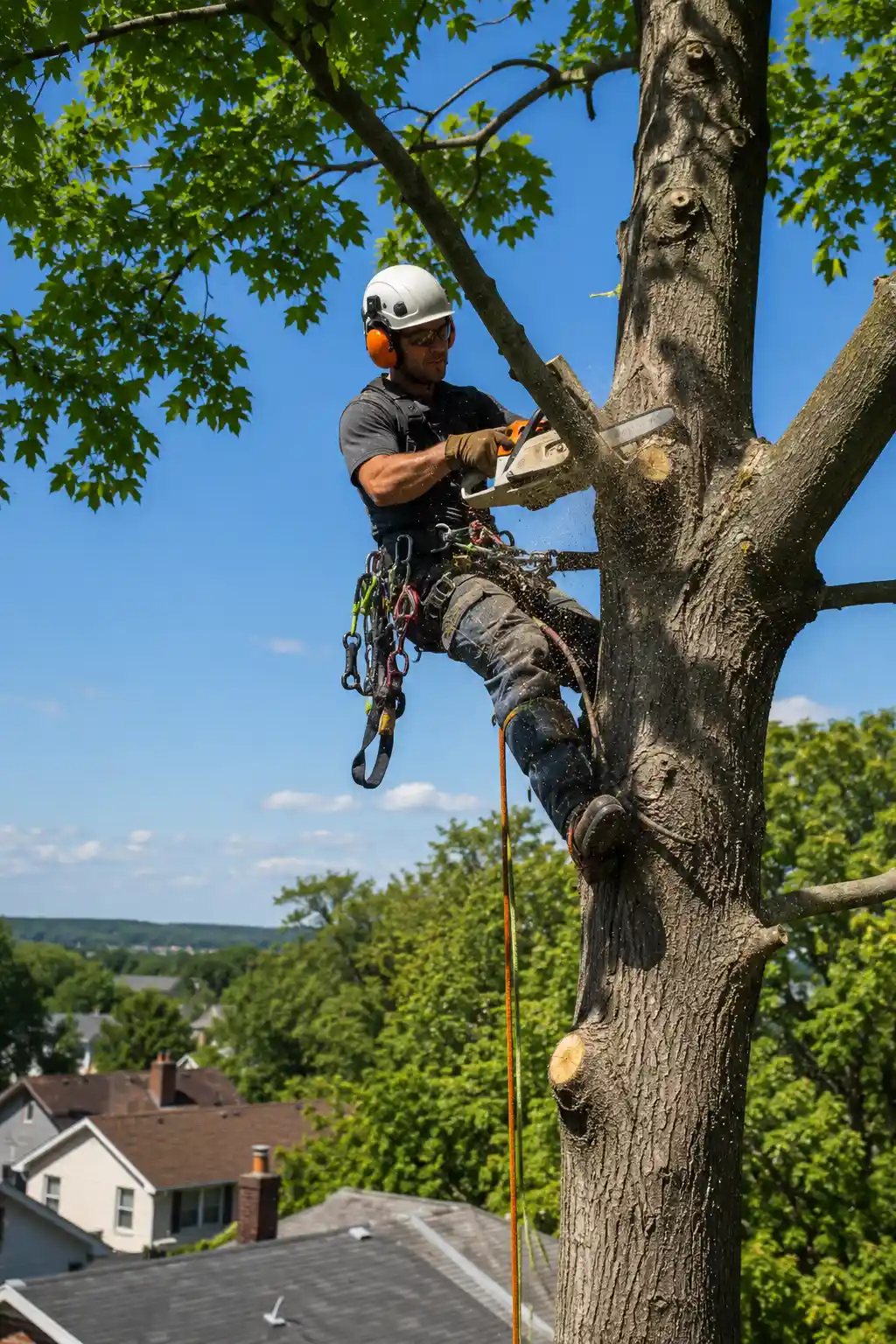
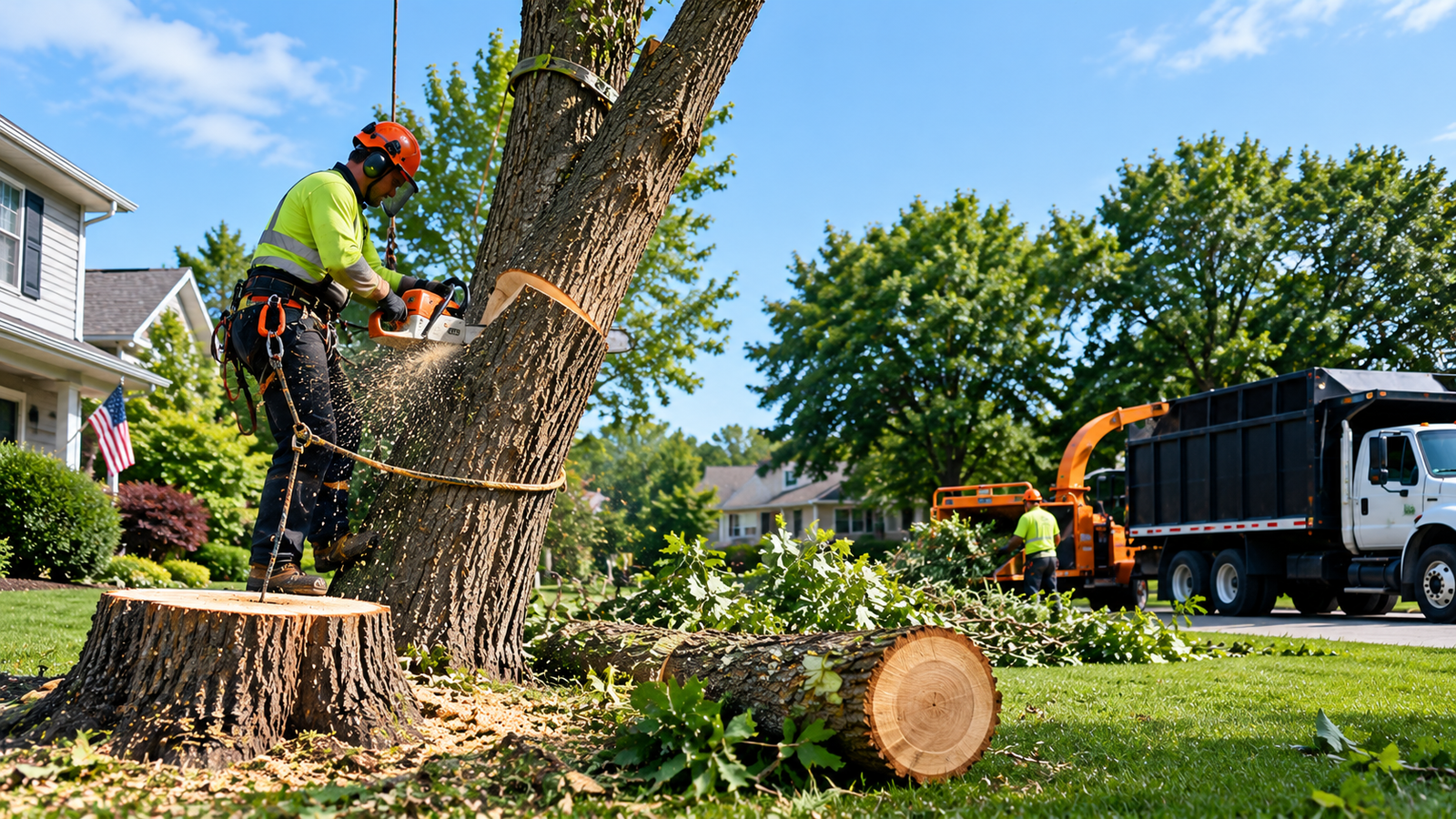
Professional tree cutting Buffalo NY services can help property owners determine whether a tree should be pruned, monitored, or removed completely. Tree cutting involves more than operating a chainsaw. Safe work requires an understanding of tree structure, cutting techniques, equipment, surrounding obstacles, and the direction in which branches or trunk sections may fall.
Nature Wise Tree Service serves property owners in Buffalo, NY, with professional tree care solutions. Whether you are concerned about storm damage, a leaning tree, dead branches, or a tree growing too close to your home, understanding the removal process can help you make an informed decision.
What Is Tree Cutting and How Does It Work?
Tree cutting is a broad term that can refer to removing branches, reducing selected parts of a tree, or cutting down the entire tree. The appropriate approach depends on the tree’s condition, size, location, and purpose of the work.
Professional tree cutting may include:
- Removing dead or damaged branches
- Cutting back hazardous limbs
- Reducing selected branches when appropriate
- Removing trees that cannot be safely retained
- Cutting fallen trees into manageable sections
- Clearing trees that interfere with planned property improvements
Not every tree requires complete removal. A healthy tree with a few damaged branches may benefit from targeted pruning. However, a tree with severe structural problems or extensive decay may require a different solution.
A professional assessment helps determine the most appropriate option for the property’s needs.
When Should You Cut Down a Tree in Buffalo NY?
Knowing when to cut down a tree Buffalo NY property owners are concerned about requires evaluating more than its appearance. Some trees show obvious signs of decline, while others have structural problems that are difficult to recognize from the ground.
Consider arranging a professional assessment if you notice the following warning signs.
1. The Tree Is Dead or Dying
Dead trees gradually lose structural strength as the wood deteriorates. Large dead branches may fall during wind, heavy snow, or ice accumulation.
Signs of decline can include extensive dead branches, missing foliage during the growing season, damaged bark, and significant decay. These symptoms do not always mean immediate removal is necessary, but they should be evaluated.
2. The Trunk Has Major Cracks
Large cracks, splits, or separated sections of a trunk can indicate structural weakness. If the damage affects a major supporting part of the tree, the risk of failure may increase.
Avoid standing beneath a visibly split tree or attempting to cut it yourself. A professional can assess the damage and recommend the appropriate next step.
3. The Tree Is Leaning Suddenly
Some trees naturally grow at an angle. However, a tree that begins leaning noticeably after a storm or develops raised soil around its base may have root damage.
A sudden change in position can indicate instability. Keep people away from the affected area and arrange professional evaluation.
4. The Tree Has Extensive Decay
Decay can weaken a tree’s trunk, roots, or major branches. Mushrooms near the base, cavities, soft wood, and damaged bark may indicate underlying problems.
Visible signs alone cannot establish the full extent of internal decay. A qualified tree care professional can evaluate the tree’s condition and determine whether it can remain safely in place.
5. The Tree Threatens Nearby Structures
Trees growing close to houses, garages, fences, driveways, or other structures may require attention when their branches become hazardous or their structure deteriorates.
A tree does not automatically need to be removed simply because it is close to a building. Proper pruning may resolve some concerns. Removal may be appropriate when the tree presents an unacceptable risk that cannot be managed through other methods.
Why Safe Tree Felling Requires Professional Planning
Tree felling involves cutting a standing tree so that it falls in a controlled direction. Although the technique may be suitable for trees in open areas, it is not appropriate for every property.
A tree’s natural lean, crown weight, trunk condition, branch distribution, and surrounding obstacles all influence how it may respond to cutting.
Before beginning work, a professional crew evaluates the work area and determines how the tree can be handled safely.
Important considerations include:
- The tree’s height and trunk diameter
- Its natural lean and crown structure
- Dead or broken branches
- Wind and weather conditions
- Nearby buildings and vehicles
- Fences, landscaping, and access routes
- Overhead and underground utilities
- Available space for equipment and debris
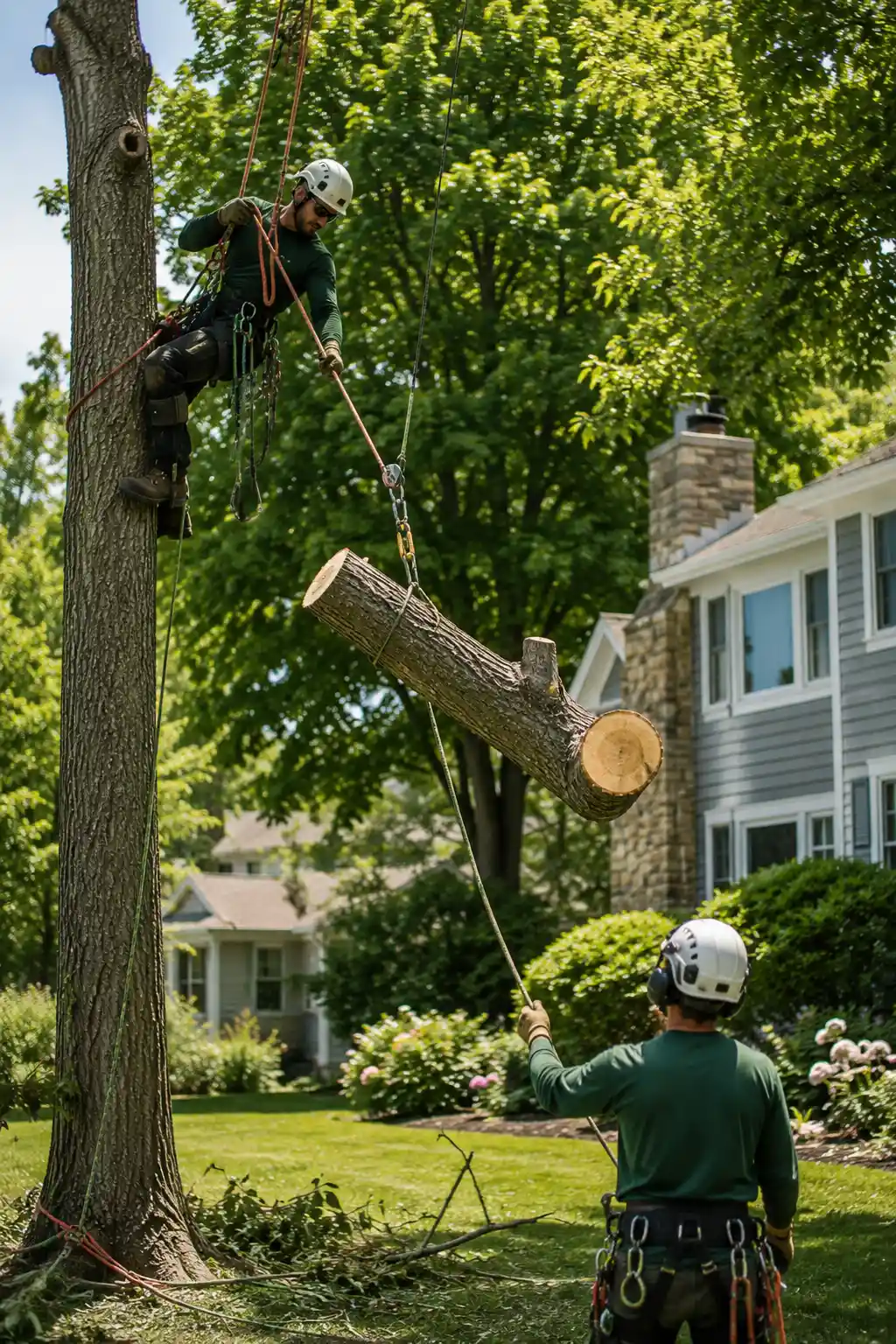
In confined residential spaces, a crew may remove a tree in smaller sections rather than felling the entire tree in one direction. Depending on the circumstances, specialized rigging or lifting equipment may be needed.
Homeowners should never attempt to fell a large tree near a house, utility line, or public access area without appropriate training and equipment.
Buffalo Weather and Tree Cutting Safety
Buffalo experiences seasonal conditions that can place additional stress on trees. Heavy snow, ice accumulation, strong winds, and severe storms may damage branches or compromise root stability.
Winter weather can also make tree cutting more challenging because snow and ice can conceal obstacles, create slippery working conditions, and add weight to branches.
After a storm, property owners should look for broken limbs, damaged trunks, exposed roots, and trees that have shifted position. However, avoid approaching trees with hanging branches or visibly unstable trunks.
If a tree or branch has contacted a power line, stay away and contact the utility provider or appropriate emergency services. Never attempt to move the branch or cut the tree yourself.
Professional tree service Buffalo NY providers can assess storm damage and help determine which issues require urgent attention.
Tree Cutting Service Buffalo: What Happens During the Job?
The exact process depends on the tree and property, but a professional tree cutting service Buffalo homeowners hire should follow a planned approach.
Step 1: Tree Assessment
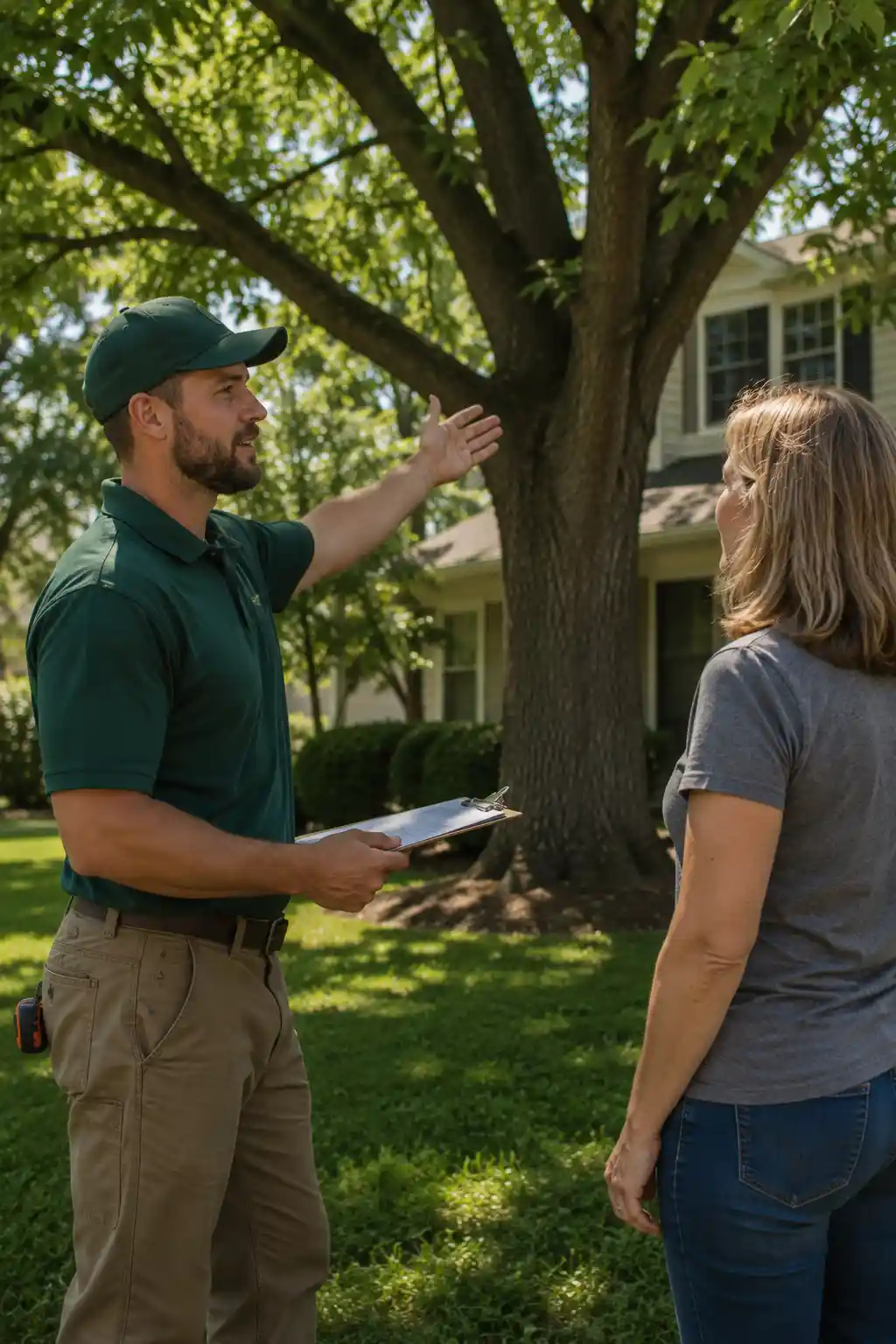
The tree is evaluated for structural condition, visible damage, location, and potential hazards. The assessment helps determine whether pruning, partial removal, or complete removal is appropriate.
Step 2: Work Area Preparation
The crew identifies potential obstacles and establishes a suitable work area. Vehicles, pedestrians, nearby landscaping, and structures must be considered before cutting begins.
Step 3: Removal Method Selection
The appropriate method is selected according to the tree’s size, condition, surrounding space, and accessibility.
Step 4: Controlled Cutting
Depending on the site, branches and trunk sections may be removed progressively. Specialized equipment may be used when sections cannot safely be lowered to the ground.
Step 5: Debris Management
Branches, wood sections, and other debris are handled according to the agreed scope of work. Property owners should confirm whether hauling and cleanup are included in their estimate.
Step 6: Final Assessment
After the tree is removed, the remaining area can be evaluated for additional work, including stump grinding, stump removal, or landscape restoration.
A clear process helps property owners understand what the job involves and what to expect when the work is complete.
Tree Cutting vs. Tree Removal Buffalo NY
Tree cutting and tree removal are closely related terms, but they do not always describe the same service.
Tree cutting may involve removing selected branches or sections of a tree while leaving the remaining tree standing. Tree removal generally refers to taking down the entire standing tree.
For example, a healthy tree with several damaged branches may only require pruning. A tree with severe structural failure, extensive decay, or irreparable storm damage may require complete removal.
Professional tree removal Buffalo NY services can help property owners understand the difference and select the appropriate solution.
Before authorizing the work, ask the contractor to explain whether the quote covers branch removal, complete tree removal, debris hauling, and stump services.
What Factors Affect Tree Cutting Costs?
The cost of tree cutting varies according to the complexity of the work. A small tree in an open area generally requires different resources from a large tree positioned between a house and garage.
Factors that may influence pricing include:
- Tree height and trunk diameter
- Tree condition and structural stability
- Accessibility of the work area
- Proximity to buildings and utility lines
- Equipment and labor requirements
- Complexity of sectional removal
- Amount of debris to be handled
- Stump grinding or removal requirements
For an accurate estimate, property owners should explain their concerns and request an assessment of the actual tree and work area.
When comparing tree removal service Buffalo NY providers, evaluate the complete scope of work rather than choosing solely on the lowest price. Confirm what is included in cleanup and whether additional services carry separate charges.
What Happens to the Stump After Tree Cutting?
Removing the trunk does not automatically remove the stump or underground root system.
A remaining stump can interfere with mowing, planting, and future landscaping. It may also become an obstacle in frequently used parts of the yard.
Stump grinding is a common option for reducing the stump below ground level. The resulting area can then be prepared for grass, mulch, or other landscaping, depending on the project.
Complete stump removal may be more appropriate when the area is needed for construction or another project that requires additional excavation.
Discussing stump management before tree cutting begins can help you plan the entire project and avoid unexpected expenses.
How to Choose a Tree Service in Buffalo NY
Choosing a tree care company involves more than finding someone with cutting equipment. Tree work requires experience, careful planning, and a clear understanding of the hazards associated with each property.
Before hiring a contractor, consider whether the company:
- Explains the recommended work clearly
- Provides a detailed estimate
- Evaluates the tree and surrounding property
- Uses suitable equipment for the job
- Discusses cleanup and debris removal
- Identifies potential hazards before work begins
- Can explain whether pruning is a reasonable alternative to removal
For complex tree work, ask about appropriate insurance coverage and relevant professional qualifications. Clear communication helps you understand the work before it starts.
Why Choose Nature Wise Tree Service?
Nature Wise Tree Service serves property owners in Buffalo, NY, with professional tree care solutions. Every tree presents different conditions, so understanding its structure, location, and surrounding environment is important when deciding how to proceed.
Whether you are concerned about a damaged tree, hazardous branches, storm damage, or a tree that may need complete removal, a professional assessment can help clarify your options.
The goal is to address genuine safety concerns while preserving healthy trees whenever practical. When removal is necessary, appropriate planning can help reduce unnecessary disruption to the surrounding property.
Schedule Professional Tree Cutting in Buffalo NY
A damaged or unstable tree should not be ignored, especially when it is close to a home, driveway, walkway, or other frequently used area. Recognizing warning signs and seeking professional advice can help you make informed decisions before a problem becomes more serious.
If you are searching for tree cutting Buffalo NY, Nature Wise Tree Service can help you evaluate your tree care needs and determine the next appropriate step.
From targeted pruning to complete tree removal, professional tree care can help maintain safer, more manageable outdoor spaces. Contact Nature Wise Tree Service to discuss your property and arrange an assessment based on the tree’s condition and location.
Frequently Asked Questions
When should a tree be cut down in Buffalo, NY?
A tree may need removal if it is dead, severely decayed, structurally unstable, or extensively damaged by a storm. A professional assessment can determine whether removal or another treatment is appropriate.
What is the difference between tree cutting and tree removal?
Tree cutting can involve removing branches or selected sections of a tree. Tree removal generally means taking down the entire standing tree, including cutting its trunk into manageable sections.
Is tree felling safe for residential properties?
Tree felling may be appropriate in open areas with sufficient clearance. In confined spaces near buildings, fences, or utility lines, sectional removal or specialized equipment may be necessary.
How much does tree cutting cost in Buffalo, NY?
Pricing depends on tree size, condition, accessibility, nearby structures, equipment needs, and cleanup requirements. An assessment of the specific property is the best way to obtain an accurate estimate.
Can a damaged tree be saved instead of removed?
Yes. Depending on the type and severity of the damage, pruning, monitoring, or other tree care may be appropriate. Trees with severe structural problems may require removal to address safety concerns.
Does tree removal include stump removal?
Not necessarily. Stump grinding and complete stump removal may be separate services. Confirm whether stump work and debris cleanup are included in the estimate before the job begins.
What should I do if a tree is damaged during a storm?
Keep people away from the affected area and avoid touching damaged branches or unstable trees. If a tree contacts a power line, stay clear and contact the utility provider or appropriate emergency services.
Why should I hire a professional tree cutting service in Buffalo?
Professional tree care providers can evaluate hazards, select suitable removal methods, and use appropriate equipment. This is particularly important for large trees, damaged trees, and trees located near buildings or utility lines.