On This Page +
- What Should You Do When a Tree Falls?
- Stay Away From Downed Power Lines
- Why Emergency Tree Removal Requires Professional Help
- When Should You Call Emergency Tree Service?
- Buffalo Weather Can Increase Tree Emergencies
- What Happens During Emergency Tree Removal?
- Do Not Cut a Fallen Tree Yourself
- What About a Tree That Has Fallen on Your House?
- What If a Tree Falls on a Car?
- Emergency Tree Service Versus Routine Tree Removal
- How to Prepare for Future Tree Emergencies
- Choose a Professional Emergency Tree Service in Buffalo
- Frequently Asked Questions
A fallen tree can turn an ordinary day into an immediate safety concern. In Buffalo, NY, strong winds, heavy snow, ice accumulation, thunderstorms, and saturated soil can cause trees or large branches to fall without much warning. When a tree lands on a roof, driveway, vehicle, fence, or power line, knowing what to do next can help protect people and property.
If you need an emergency tree service Buffalo NY property owners can rely on, the first priority should always be safety. Do not rush outside to inspect or move a fallen tree before determining whether electrical wires, unstable branches, damaged structures, or other hazards are present.
Nature Wise Tree Service provides professional tree care services in Buffalo, NY, including assistance with urgent tree situations. This guide explains what to do immediately after a tree falls and when professional emergency tree removal may be necessary.
What Should You Do When a Tree Falls?
The first few minutes after a tree falls are important. Your response should focus on people, electrical hazards, property damage, and preventing additional injuries.
Start by keeping everyone away from the fallen tree. Even when the tree appears stable, branches can remain under tension and may move unexpectedly. A partially uprooted tree can also shift or fall further.
Next, look for obvious hazards from a safe location. Check whether the tree has damaged a home, garage, vehicle, fence, or other structure. Most importantly, determine whether the tree or branches are touching electrical lines.
If power lines are involved, stay away and contact the appropriate utility or emergency authority. Never attempt to cut, pull, climb, or move a tree that may be in contact with an energized line.
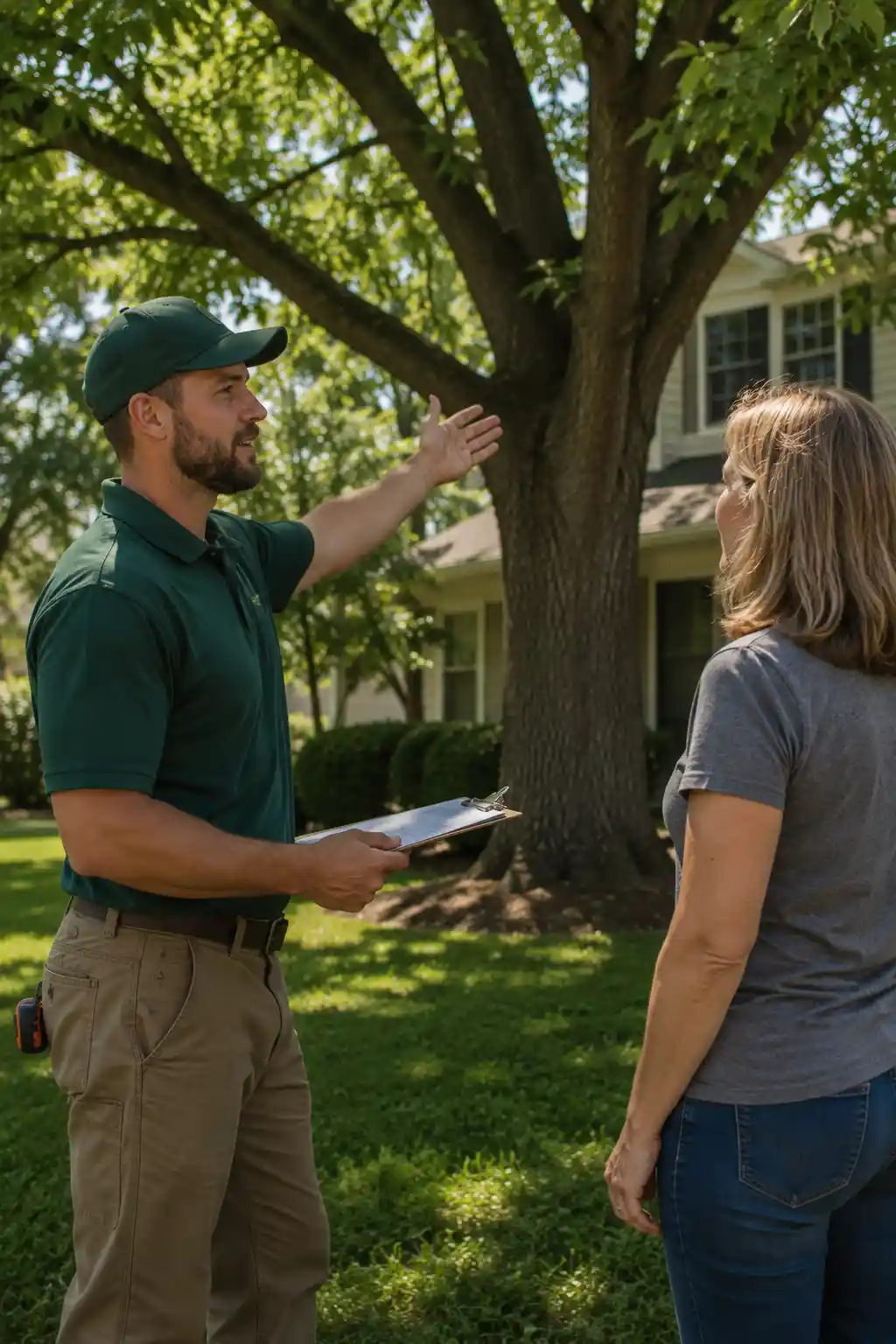
Once immediate hazards have been addressed, contact a qualified tree professional for an assessment.
Stay Away From Downed Power Lines
Electrical wires are one of the most serious hazards associated with fallen trees.
A tree can pull down utility lines during a storm, and a line may not always look energized. You should never assume that a wire is safe simply because there are no sparks or visible signs of electricity.
Keep people and pets away from the area and contact the utility company or emergency services as appropriate.
A professional tree service should coordinate its work around electrical hazards and follow appropriate safety procedures. Homeowners should never attempt DIY tree removal when utility lines are involved.
Why Emergency Tree Removal Requires Professional Help
Emergency tree removal is different from routine tree removal.
A tree that has fallen naturally in an open section of a backyard may be relatively straightforward. However, a tree that has landed across a house or is leaning against another tree can create complicated structural and safety issues.
Professional crews evaluate factors such as:
- Tree size and species
- Direction of the fall
- Remaining branches and hanging limbs
- Trunk stability
- Root plate movement
- Nearby structures
- Utility lines
- Access for equipment
- Ground conditions
- Safe cutting and removal methods
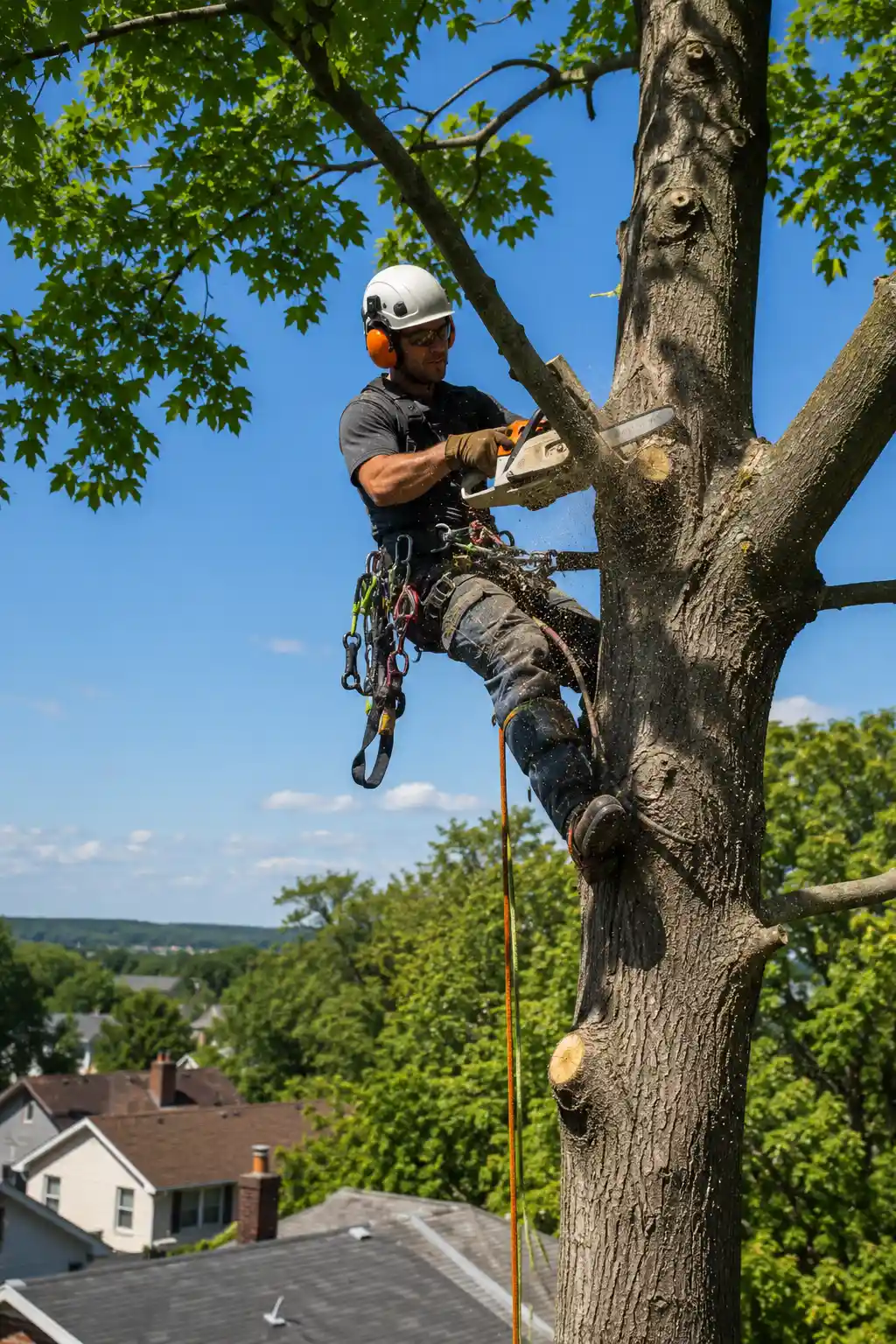
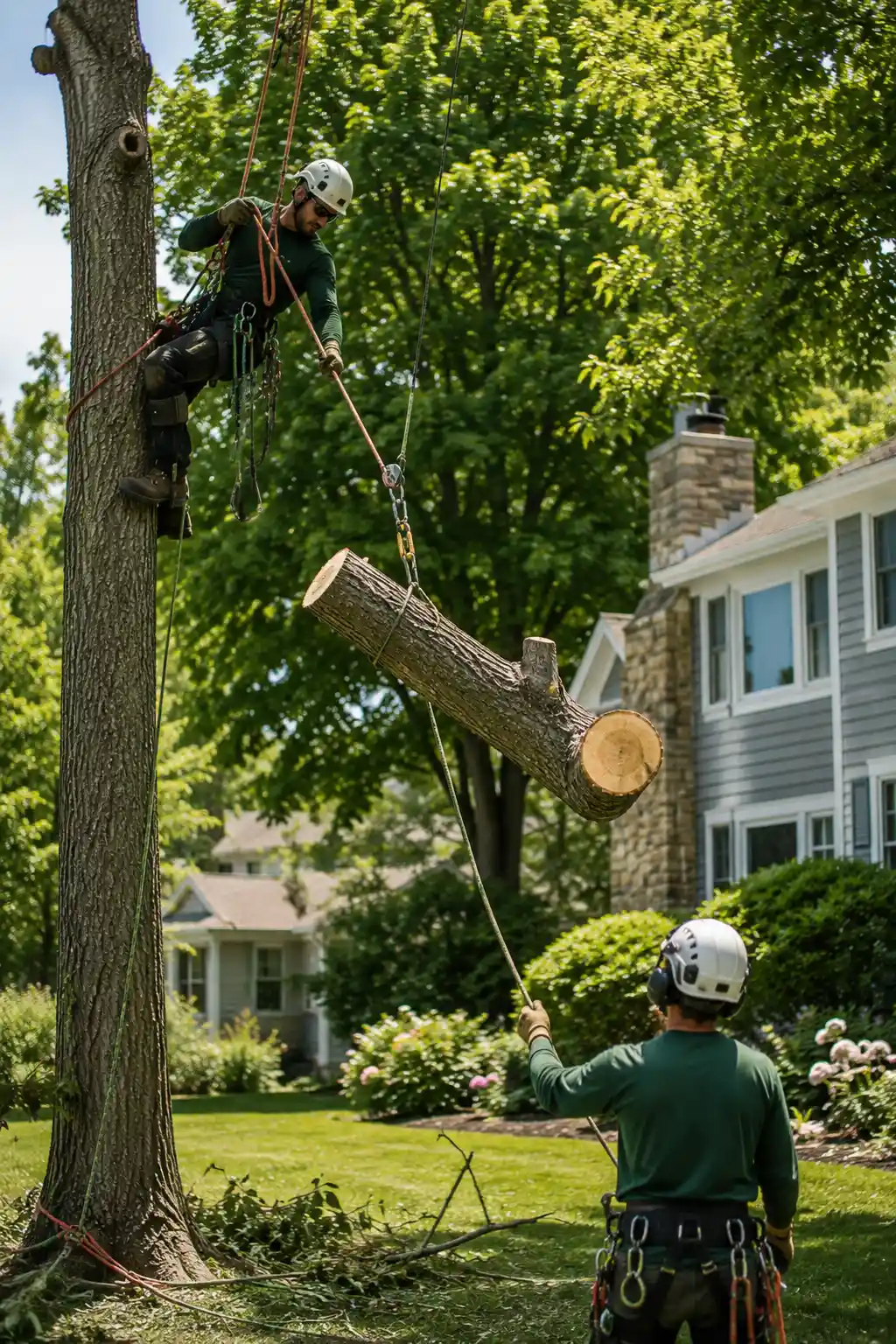
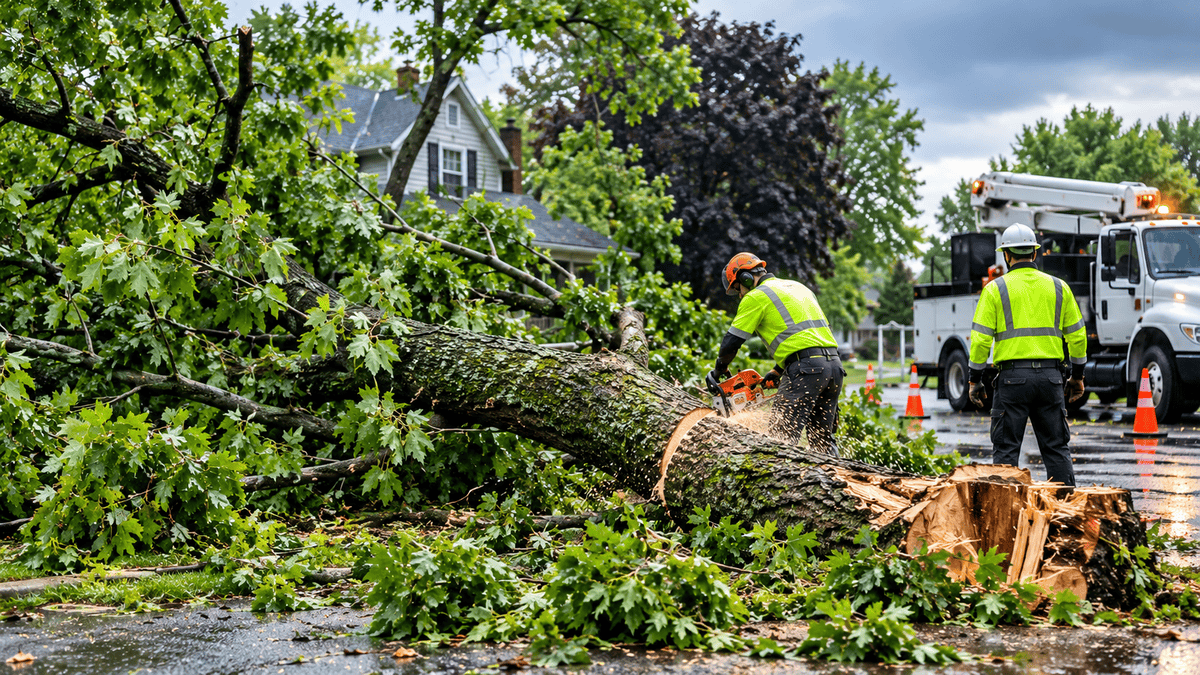
Depending on the situation, a crew may use ropes, rigging systems, chainsaws, chippers, loaders, or other professional equipment.
The objective is not simply to cut the tree into pieces. It is to control the removal process and reduce the possibility of additional damage.
When Should You Call Emergency Tree Service?
Not every fallen branch requires emergency service. However, certain situations should be treated as urgent.
Call a professional when a fallen tree:
- Has landed on a house or garage
- Is blocking a major driveway or access route
- Is resting on a vehicle
- Is touching or near power lines
- Is leaning against another tree
- Has large branches suspended above an occupied area
- Has partially uprooted but remains standing
- Is blocking a road or creating a public safety hazard
- Has caused significant structural damage
- Is unstable after severe weather
If you are searching for a 24/7 tree service near me, make sure the company actually handles emergency situations rather than assuming that standard business hours mean round the clock response.
Buffalo Weather Can Increase Tree Emergencies
Buffalo’s weather can place substantial stress on trees throughout the year.
Winter snow and ice can add considerable weight to branches. Strong winds can break limbs or uproot trees, especially when the soil is saturated. Thunderstorms can also create sudden branch failures.
Trees with existing weaknesses may be more vulnerable during severe weather. Dead branches, decay, cracks, root damage, poor structure, and previous storm damage can increase the risk of failure.
Regular tree inspections and maintenance can reduce some risks, but no preventive service can guarantee that a tree will never fall during extreme weather.
What Happens During Emergency Tree Removal?
When a professional tree crew arrives, the first step should be an assessment of the site.
The crew identifies hazards and determines how the tree can be safely removed. If the tree is resting against a structure, removal may need to happen in controlled sections rather than by cutting the trunk at the base.
Branches may be removed first to reduce weight. Larger sections can then be lowered or moved using appropriate rigging techniques.
The exact process depends on the tree and surrounding property. A tree across an open lawn may require a different approach than a tree that has fallen onto a roof.
After the hazardous portions have been removed, the remaining trunk can be cut into manageable sections. Depending on the agreed service, branches and wood may then be chipped, hauled away, or left on the property.
Do Not Cut a Fallen Tree Yourself
DIY cleanup may seem tempting after a storm, particularly when a tree is blocking a driveway or yard.
However, chainsaw work around a fallen tree can be dangerous. Fallen trunks and branches can contain stored tension. Cutting one section can cause another section to move unexpectedly.
Uprooted trees are especially hazardous because the root plate can shift or fall back into position.
There can also be hidden nails, fencing, landscaping materials, vehicles, structures, or utility hazards beneath branches.
If you do not have professional tree removal experience and equipment, it is safer to keep your distance and contact a qualified tree service.
What About a Tree That Has Fallen on Your House?
A tree that lands on a home should be treated as a property and safety emergency.
First, move people away from the affected area if it is safe to do so. If the structure appears unstable or there is an immediate danger, contact emergency services.
Do not climb onto the roof to inspect the tree yourself. Additional branches may fall, and the roof may have structural damage.
Once the immediate danger has been addressed, contact your insurance company and a professional tree service. Take photographs from a safe location if doing so does not put anyone at risk.
Insurance coverage for tree damage depends on the specific policy and circumstances, so homeowners should review their policy and communicate directly with their insurer.
What If a Tree Falls on a Car?
A fallen tree can cause significant vehicle damage.
If the vehicle is occupied, get to a safe location if possible. Do not attempt to move branches yourself, especially when the tree is under tension or near electrical lines.
Contact your insurance provider and document the damage from a safe distance. A professional tree crew can determine how to remove the tree without causing additional unnecessary damage to the vehicle or surrounding property.
Emergency Tree Service Versus Routine Tree Removal
Routine tree removal can usually be planned in advance. Homeowners may schedule an assessment, compare estimates, arrange access, and choose a convenient service date.
Emergency tree removal is typically triggered by an immediate hazard.
The difference is important because emergency projects may require rapid scheduling, additional safety measures, specialized equipment, and more complicated removal techniques.
If a tree is dead or declining but has not yet fallen, scheduling professional tree care before a storm can potentially reduce the chance of an emergency situation.
How to Prepare for Future Tree Emergencies
You cannot control severe weather, but you can prepare your property.
Have large or potentially hazardous trees inspected periodically, especially when they are close to homes, garages, driveways, play areas, or frequently used outdoor spaces.
Look for visible warning signs such as:
- Dead or hanging branches
- Large cracks in the trunk
- Cavities or significant decay
- Newly exposed roots
- Severe leaning
- Broken major limbs
- Fungal growth near the trunk base
- Significant storm damage
These signs do not automatically mean that a tree must be removed. A qualified professional can evaluate the tree and determine whether pruning, monitoring, or removal is appropriate.
Keeping important contact information for your utility provider, insurance company, emergency services, and local tree service can also make your response faster when a storm occurs.
Choose a Professional Emergency Tree Service in Buffalo
When a tree falls unexpectedly, speed matters, but safety matters more. Choosing a qualified tree service can help ensure the situation is assessed correctly and the removal process is handled with appropriate equipment and techniques.
Nature Wise Tree Service serves Buffalo, NY, with professional tree care solutions for residential and property owners. If you are dealing with a fallen tree, dangerous branches, storm damage, or another urgent tree problem, professional evaluation can help determine the safest next step.
Do not put yourself at unnecessary risk by cutting or moving a hazardous tree. Keep people away from the area, stay clear of power lines, address immediate emergencies, and contact a qualified tree professional when removal is required.
Frequently Asked Questions
What is emergency tree service?
Emergency tree service addresses urgent tree hazards that require prompt professional attention. Examples include fallen trees, dangerous hanging branches, storm damaged trees, and trees threatening structures or access areas.
How quickly can emergency tree removal be performed?
Response times depend on weather conditions, demand, crew availability, location, and the severity of the situation. During major storms, emergency tree companies may receive many calls at the same time.
Is emergency tree removal more expensive than regular tree removal?
It can be. Emergency projects may require urgent scheduling, additional labor, specialized equipment, difficult working conditions, and increased safety precautions.
What should I do if a fallen tree is touching power lines?
Stay away from the tree and wires. Keep children and pets away from the area and contact the appropriate utility company or emergency services. Never attempt to cut or move the tree yourself.
Can I remove a fallen tree myself?
DIY removal can be dangerous because fallen trees can contain significant tension and unstable sections. Professional equipment and experience are recommended for hazardous or large fallen trees.
Does tree removal include stump removal?
Not necessarily. Tree removal and stump removal are often separate services. Ask the tree company whether stump grinding or removal is included in your estimate.
What should I do if a tree falls on my house?
Move away from the affected area if necessary, contact emergency services if there is an immediate safety concern, notify your insurance company, and contact a qualified tree professional. Avoid climbing onto the roof or attempting to remove the tree yourself.
How can I reduce the risk of emergency tree removal?
Regular professional tree inspections, appropriate pruning, removal of hazardous deadwood, and addressing structural problems early can help reduce some tree related risks. Severe weather can still cause unexpected failures.